96
spearmint tea
based on 2251 reviews
Your savings will grow with each shipment. Save 5% now, and up to 15% in the future. Please select size:
sample
makes 5 cups
$2
1.5oz
37¢ per cup
$7
8oz
14¢ per cup
$14
teabags
15 full leaf pyramids
$7
A native of the Mediterranean, spearmint was revered by ancient Romans for its ability to "stir up the mind." It continues to be savoured for its refreshingly clear aroma and soothing qualities. If you find peppermint a bit too cool sometimes, spearmint is definitely for you.
Where peppermint's intensity comes from menthol (its dominant compound), spearmint gets its character primarily from carvone, a different molecule that produces a sweeter, warmer, rounder mint character without the aggressive cooling sensation of menthol. The result: a herb with warming and cooling notes simultaneously, very gentle to the palate, with the familiar sweetness of spearmint gum and the clarity of a fresh garden herb. Naturally caffeine-free.
Where peppermint's intensity comes from menthol (its dominant compound), spearmint gets its character primarily from carvone, a different molecule that produces a sweeter, warmer, rounder mint character without the aggressive cooling sensation of menthol. The result: a herb with warming and cooling notes simultaneously, very gentle to the palate, with the familiar sweetness of spearmint gum and the clarity of a fresh garden herb. Naturally caffeine-free.

TEA TYPE
Herbal Tea

CAFFEINE
No caffeine
Herbal teas are naturally caffeine-free unless blended with tea, mate, or another caffeinated ingredient.

STEEP
212° for 5-10 mins
Steep longer for a fuller infusion and more pronounced botanical flavor.
Customer Reviews (2251)
Teabags
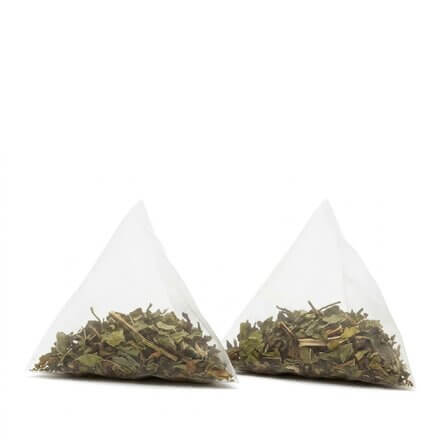
teabags
15 full leaf pyramids
$7
Lore
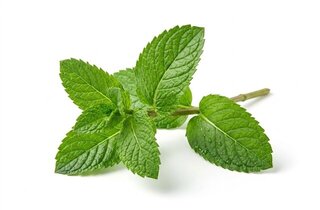
Spearmint has been used by humans for thousands of years. Its name comes from the spear-like tips at the ends of its serrated leaves, though it is also known by nicknames like common mint, garden mint, or lamb mint. Like many mint plants, it contains menthol in its leaves, though not as much as is found in its hybridized descendant peppermint. Because of its milder flavor, spearmint is popular in both food and drinks, including lamb dishes, cocktails, and Moroccan mint tea, which is a social tea made with spearmint, gunpowder tea, and sugar.
Raw Honey for Herbals
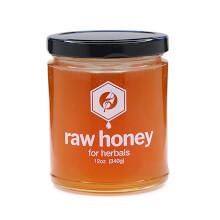
12oz
honey for garden herbals
$9
Part of herbal garden sampler
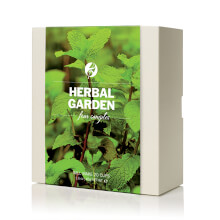
herbal garden
will make 20 cups
$12
Questions and Answers
Ask a question about spearmint and have the Adagio Teas community offer feedback.
How much spearmint should I add to gunpowder to make 1 cup of Moroccan tea?
Asked by Jonathan Van Horn
on January 10th, 2018
on January 10th, 2018
Is this 100% dried spearmint leaves?
Asked by Sarah Henbest
on May 15th, 2024
on May 15th, 2024
How many servings in the 8oz one?
Asked by
on July 2nd, 2023
on July 2nd, 2023
What's the best way to make this into iced tea?
Asked by Kieron Roberson
on May 22nd, 2023
on May 22nd, 2023
I’m looking for a chocolate tea to combine with my spearmint tea to create the perfect iced tea/(spear)mint pattie experience. I do also plan adding cream. Any thoughts?
Asked by Melissa Caraway
on July 22nd, 2025
on July 22nd, 2025
Direct Trade Advantage
We import directly from the artisan farmers whose names and faces you'll find throughout our website.
This makes our products fresher than those offered by the companies who use middlemen and brokers, and also less expensive.
Here's a comparison of how much more you'd be paying by buying this elsewhere:
David's Tea:
111% more expensive
What Is Spearmint Tea?
Spearmint Tea is an herbal infusion made from the dried leaves of the spearmint plant (Mentha spicata) — one of the world's oldest and most widely cultivated herbs, used for thousands of years across the Mediterranean, Middle East, and beyond. The name comes from the spear-like pointed tips at the ends of its serrated leaves — a visual reference that the Lore section notes, alongside the alternate names "common mint," "garden mint," and "lamb mint" that are used across different cultures and culinary traditions.
With a score of 96 from 2,251 customers, Adagio's Spearmint Tea is the second highest-scoring herbal tea in the catalog, just behind Peppermint's 98. Among the four teas in the Herbal Garden Sampler (Chamomile, Lemon Grass, Peppermint, Spearmint), Spearmint is the sweet, gentle mint — the one most often chosen by buyers who love mint flavour but find peppermint too intense.
Spearmint vs. Peppermint: The Compound Difference
The single most important distinction between spearmint and peppermint is a chemistry question, and the answer explains everything about why they taste different:
- Peppermint (Mentha × piperita) — menthol-dominant. Approximately 40–55% of peppermint's essential oil is menthol (C₁₀H₂₀O), which activates the TRPM8 cold receptor and produces the sharp, intense, icy cooling sensation. Bold, assertive, medicinal-adjacent.
- Spearmint (Mentha spicata) — carvone-dominant. Spearmint's essential oil is approximately 55–75% carvone (C₁₀H₁₄O), a completely different molecule with no cold-receptor activity. Carvone produces the characteristic spearmint sweetness — warm, round, candy-like — without the freezing sensation of menthol. Spearmint also contains menthol, but at very low concentrations (typically under 1% of essential oil).
The Lore section notes that peppermint is actually spearmint's hybridised descendant — a natural cross between spearmint (Mentha spicata) and watermint (Mentha aquatica). This means spearmint is the older, more ancestral plant, and peppermint is the more recently diverged hybrid that developed the high menthol content. Spearmint came first; peppermint is spearmint's more intense offspring.
The Name "Spearmint": Why It's Called What It Is
The name derives directly from the plant's most distinctive physical feature: the sharply pointed, spear-like tips at the ends of each serrated leaf. Unlike peppermint's more rounded leaf tips, spearmint leaves end in a characteristic upward-pointing tip that resembles a spear. The Latin species name, spicata, means "having spikes or points" — the same reference.
The alternate names — common mint, garden mint, lamb mint — reflect how embedded spearmint is in everyday cooking traditions. "Lamb mint" refers to the classic pairing of mint with roast lamb in British cuisine; "garden mint" reflects its status as the default cultivated mint in most European kitchen gardens; "common mint" acknowledges that spearmint, not peppermint, is the most widely planted mint in domestic gardens worldwide.
Spearmint and Moroccan Mint Tea
The Lore section identifies spearmint as the traditional mint in Moroccan Mint tea — "a social tea made with spearmint, gunpowder tea, and sugar" — and this is one of the most commercially important connections in the herbal tea range:
Moroccan Mint tea (atay in Moroccan Arabic) is among the world's most culturally significant tea preparations, served across North Africa and the Middle East as a gesture of hospitality and social connection. The traditional recipe uses spearmint (not peppermint) as the mint component specifically because spearmint's sweeter, less aggressively cooling character integrates better with the Gunpowder green tea base and the sugar sweetening that characterises the preparation. Peppermint's intense menthol would overwhelm the balance; spearmint's carvone sweetness complements it.
To make traditional Moroccan Mint tea with Adagio ingredients: brew Adagio's Gunpowder Tea at 212°F for 3 minutes, add a generous amount of fresh or dried spearmint (either this loose leaf spearmint or fresh garden spearmint), sweeten with sugar to taste, and serve in small glasses with a high-pour to aerate. The spearmint is added to the teapot alongside the gunpowder and steeped together — or added as a separate addition after straining.
Spearmint Tea Flavour Profile
- Sweet spearmint character — the dominant quality. The carvone-driven sweetness that reviewers compare to spearmint gum, but botanical and complex rather than synthetic. Present from the first aroma of the dry leaf through the cup and into the finish. Warm and sweet rather than sharp and cool.
- Refreshingly clear — the product description's most precise characterisation. Not the bold intensity of peppermint — a clarity that is clean and immediate without overwhelming. The "clear" quality is what makes spearmint feel simultaneously fresh and gentle.
- Soothing and warming — the cooling dimension of spearmint is present (the small amount of menthol) but it arrives as a gentle warmth rather than a cooling blast. Reviewers consistently describe the overall effect as warming rather than cooling — the opposite experience from peppermint at equivalent brew strength.
- Light golden-brown liquor — slightly deeper than chamomile's golden and lighter than peppermint's copper. A warm, luminous colour that reviewers note as beautiful in a glass mug.
- Tastes like a bright sunny day — the review that best captures the character: "Tastes like a bright sunny day in a cup." Not the night-time calm of chamomile or the cool refreshment of peppermint — spearmint's warmth and sweetness suggest garden, sunlight, and summer herbs.
Spearmint's Traditional Uses: Mind, Digestion, and Sinuses
The product description notes that ancient Romans valued spearmint for its ability to "stir up the mind" — an energising, mentally clarifying association rather than the calming association of chamomile. Reviewers echo traditional uses across multiple dimensions:
- Digestive comfort — spearmint shares peppermint's antispasmodic properties on smooth muscle tissue, though at lower intensity. The carvone compound also has documented digestive effects, and spearmint tea has a long tradition as a post-meal digestive aid across Mediterranean and Middle Eastern cultures.
- Sinus relief — the small amount of menthol in spearmint still activates nasal cold receptors, producing a gentler version of the decongestant effect that peppermint delivers more intensely. Reviewers specifically note "sinus relief" as a benefit.
- Mental clarity and wake-up effect — the "stir up the mind" characterisation from the Romans aligns with reviewers who mention "a pleasant wake-up effect." Spearmint has been associated with mental alertness in traditional medicine, and the clear, fresh aromatic profile is inherently more activating than the calming scents of chamomile or lavender.
Spearmint Tea Hot, Iced, and Blended
Spearmint shares peppermint's versatility across preparations, with some specific applications where it outperforms peppermint:
- Hot — the classic preparation. 212°F, 5–10 minutes. The longer steep develops the sweet spearmint character more fully; unlike peppermint, spearmint at longer steeps becomes sweeter rather than sharper.
- Iced — excellent cold. Cold-brewed or hot-steeped-then-chilled, spearmint iced tea is one of the most naturally refreshing summer herbals. The sweetness and clarity of carvone translate beautifully to cold preparation.
- With honey — raw honey amplifies spearmint's natural sweetness even more directly than it does peppermint's, because carvone and honey share aromatic registers that menthol doesn't. A small amount of honey transforms spearmint tea into something genuinely luxurious.
- Blended with black or green tea — reviewers note spearmint's superior blending character compared to peppermint. Where peppermint can overwhelm a black tea base, spearmint's gentler character integrates more gracefully, adding mint freshness without taking over the cup.
- Moroccan Mint base — the traditional cultural use. See the section above and Gunpowder Tea for the base tea.
- With lamb and food pairings — spearmint's culinary tradition extends to cooking applications. The dried spearmint can be steeped lightly and used as a mint sauce base, or steeped strongly and used as a flavouring in cooking — the same spearmint that goes into the cup also belongs in the kitchen.
How to Brew Spearmint Tea
- Water temperature — 212°F (100°C), fully boiling. Spearmint is an herbal infusion, not a true tea. Boiling water is correct and produces no bitterness from spearmint alone.
- Leaf quantity — one heaping teaspoon (2–3g) per 8oz cup. Dried spearmint is light; measure generously for the fullest sweet mint character.
- Steep time — 5–10 minutes. Five minutes produces a lighter, more delicate cup where the sweet carvone character is most prominent; ten minutes produces a fuller, more robust infusion. Unlike peppermint, longer steeping makes spearmint sweeter rather than more intense or sharper.
- Covered steeping — cover the cup during steeping to preserve the volatile aromatic compounds. Spearmint's carvone is more volatile than menthol; a covered steep retains the full sweet spearmint character in the cup rather than allowing it to escape as steam.
- With honey — add after steeping. The honey amplifies the carvone sweetness in a way that works particularly well for spearmint.
- Multiple steepings — spearmint yields a reasonable second steeping, though lighter. The sweet character reduces in the second steep; the herbal clarity remains.
Spearmint Tea Caffeine Content
Spearmint Tea contains zero caffeine — completely and genuinely caffeine-free. Spearmint (Mentha spicata) is an herb, not a tea plant, and contains no caffeine. At any brew strength or steep time, spearmint tea carries zero caffeine. This makes it appropriate at any hour, including as a digestive post-dinner tea or a morning cup that "stirs up the mind" without any stimulant content — the "wake-up effect" reviewers note is entirely from the aromatic and psychological impact of the spearmint character, not from caffeine.
Spearmint Tea and the Herbal Garden Sampler
Spearmint is one of four teas in the Herbal Garden Sampler alongside Chamomile, Lemon Grass, and Peppermint. In context, Spearmint and Peppermint form the mint pair of the sampler — the same plant family, the same leaf form, fundamentally different flavour profiles. Tasting Spearmint and Peppermint side by side is the most efficient demonstration of how much chemistry matters in flavour: same plant family, same fresh green leaves, one sweet and warming, the other sharp and icy. The sampler makes that contrast immediately available. See the Herbal Garden Sampler.
Spearmint Tea as a Gift
Spearmint is the mint tea gift that works for everyone — including, and especially, people who think they don't like peppermint. The product description's framing is the best gift pitch available: "If you find peppermint a bit too cool sometimes, spearmint is definitely for you." Many buyers discover spearmint having avoided mint tea entirely because peppermint was too aggressive, and that discovery — "this is what mint tea can taste like" — is one of the most common reactions in the 2,251 reviews.
Available in a sample ($2, 5 cups), 1.5oz ($7, 18 cups, 37¢/cup), 8oz ($14, 97 cups, 14¢/cup), and pyramid teabags ($7, 15 bags). The 1.5oz pouch at $7 is the ideal gift size. For the most informative mint comparison, pair with Peppermint — both scored 96 and above, both at 14¢/cup, together demonstrating the full range of what mint tea can be.
Buy Spearmint Tea Online
Order Spearmint loose leaf herbal tea online — pure spearmint leaf (Mentha spicata), naturally caffeine-free, scored 96 by 2,251 customers, from 14¢ per cup. Free shipping on qualifying orders. Available in sample, 1.5oz, and 8oz loose leaf pouches and pyramid teabag format. Delivered from Adagio's New Jersey warehouse within one business day.