95
jade oolong tea
based on 1559 reviews
Your savings will grow with each shipment. Save 5% now, and up to 15% in the future. Please select size:
sample
makes 10 cups
$5
4oz
36¢ per cup
$18
16oz
25¢ per cup
$49
portions
Teforia-ready
$18
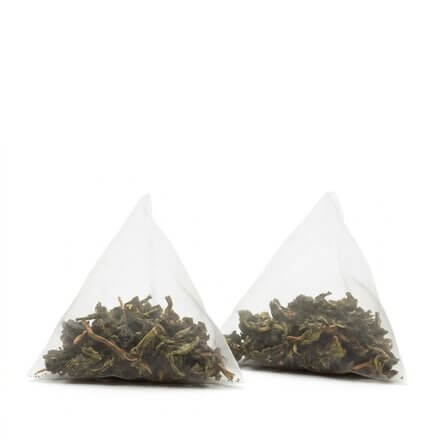
teabags
15 full leaf pyramids
$18
Jade oolong tea from the Tung Ting mountain in Nantou County, Taiwan — a highly prized tea grown by a family of tea farmers who have cultivated this specific mountain for more than 50 years. Jade oolongs are a beautiful deep green in appearance, with large, tightly rolled leaves. Once infused at the low temperature this tea requires — 180°F, not the boiling water of black tea — these lightly oxidised leaves gradually unfurl to release their essential oils: a green-gold liquor with a fresh green-floral aroma of camellia and wisteria, sweet flavour, and a clean, delicate mouthfeel.
This is light oolong at its most classic — the style that first introduced most Western tea drinkers to the oolong category, named "jade" for the colour of the dry leaf and the character of the cup. Unlike the darker, more oxidised oolongs used in Peach Oolong, Jade oolong's light oxidation preserves the fresh, floral, green tea-adjacent character that makes it the most approachable and most accessible oolong in the catalog.
This is light oolong at its most classic — the style that first introduced most Western tea drinkers to the oolong category, named "jade" for the colour of the dry leaf and the character of the cup. Unlike the darker, more oxidised oolongs used in Peach Oolong, Jade oolong's light oxidation preserves the fresh, floral, green tea-adjacent character that makes it the most approachable and most accessible oolong in the catalog.

TEA TYPE
Oolong Tea

CAFFEINE
Moderate
Oolong usually falls between green and black tea, offering a balanced caffeine level with a smooth, steady lift.

STEEP
180° for 3-5 mins
A second steep can reveal more aroma, sweetness, and depth.
Customer Reviews (1559)
Teabags
teabags
15 full leaf pyramids
$18
Iced Teas
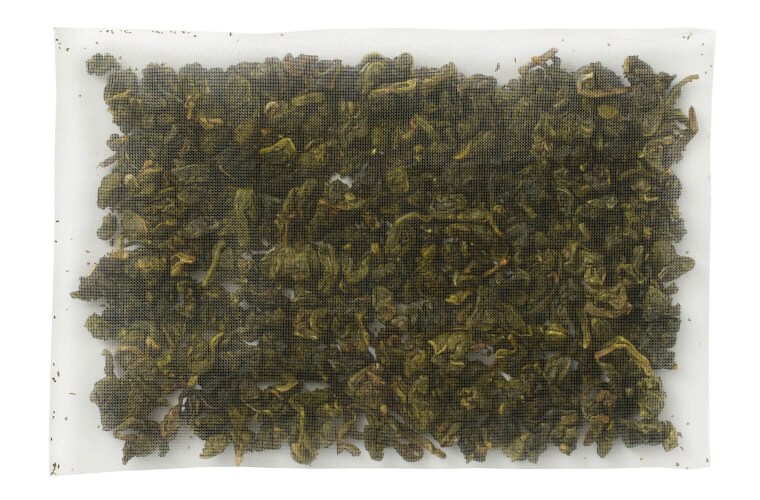
6 quarts
6 x quart-sized pouches
$8
Fresh Portions
jade oolong
portions
Teforia-ready
$18
Lore
A marvelous wulong classic grown in the Tung Ting mountain area of Nantou County on Taiwan, Jade Oolong (Huan Jin Gui) is an exciting confluence of trial and error, wisdom and art that has, for more than 50 years, elevated our tea farmer's family to one of the premier tea-growers on the island. Xu Zheng Ren prides himself in offering a tea he grows and processes. Its deep green leaf, lightly oxidized then rolled tightly into balls, releases a green-gold liquor in the cup: sweet, delicate yet with an appealing fragrance of camellia and wisteria flowers.
Questions and Answers
Ask a question about jade oolong and have the Adagio Teas community offer feedback.
How many times can I steep this tea?
Asked by Chris Shelton
on April 7th, 2018
on April 7th, 2018
Why is Jade Oolong brewed at such a low temp, but other oolongs are at higher temps?
Asked by Irene Ladd
on April 10th, 2020
on April 10th, 2020
Is the sample loose tea or tea bags?
Asked by John Dowell
on January 27th, 2019
on January 27th, 2019
How many oz are in the sample for this tea?
Asked by Joseph Lancaster
on August 22nd, 2021
on August 22nd, 2021
what would be the closest analog/match to this tea from the masters collection?
Asked by A R
on March 31st, 2024
on March 31st, 2024
How many times can I steep this tea?
Asked by
on September 22nd, 2025
on September 22nd, 2025
Meet our jade oolong farmer, Xu Zheng Ren
To ensure the best quality and value, we import our teas directly from the countries in which they are grown, working closely with the farmers who tender them. Our Roots Campaign connects our customers with the rich stories and the farmers behind some of our most popular teas.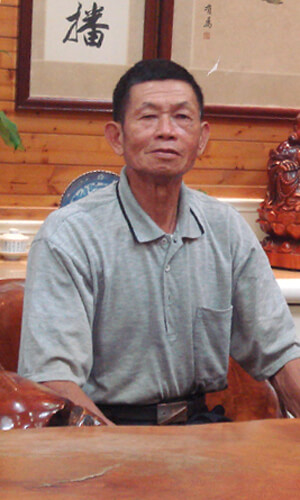
How long have you been growing tea?
“50 years”
What got you started in the Tea industry?
“Father Heritage.”
Can you describe a typical day out in the field. How many hours would that be?
“8 to 10 hours. Weeding and fertilizing.”
What Is Jade Oolong Tea?
Jade Oolong Tea — known in Chinese as Huan Jin Gui (黃金桂), "Golden Cassia" — is a light-oxidised Taiwanese oolong from the Tung Ting (凍頂) mountain area of Nantou County in central Taiwan. It is one of the most prized and internationally recognised styles of Taiwanese oolong, named for the jade-green colour of the carefully rolled leaves and the clean, floral, jade-like purity of the cup.
Tung Ting, literally "Frozen Summit," sits at approximately 700–1,000 meters above sea level in central Taiwan's Nantou County — a growing region whose combination of altitude, rainfall, and cool mountain temperatures produces the specific terroir that Tung Ting oolong is associated with worldwide. Adagio's Jade Oolong is sourced directly from this mountain, from a single farming family that has grown tea here for more than 50 years.
Meet the Farmer: Xu Zheng Ren and 50 Years on Tung Ting Mountain
Jade Oolong is one of the few teas in the Adagio catalog with a named, personally interviewed farmer behind it. Xu Zheng Ren has grown tea on Tung Ting mountain for 50 years — a generational commitment to this specific growing location that represents the kind of single-estate, farmer-direct sourcing that makes Adagio's direct trade approach meaningful rather than marketing language.
In Xu Zheng Ren's own words from the Adagio Roots Campaign interview:
- How long have you been growing tea? "50 years."
- What got you started in the tea industry? "Father Heritage." — a two-word answer that says more about the depth of this tradition than a longer explanation would.
- Can you describe a typical day in the field? "8 to 10 hours. Weeding and fertilizing."
Xu Zheng Ren prides himself on offering a tea he grows and processes personally — a complete chain of custody from the mountain soil to the finished leaf that eliminates the multiple intermediary steps that most commercial tea requires. The Tung Ting mountain terroir and Xu Zheng Ren's 50 years of cultivation knowledge together are what produce the camellia-wisteria floral character, green-gold liquor, and clean delicate mouthfeel that the product description captures.
Light Oolong vs Dark Oolong: Understanding Jade's Place in the Spectrum
Oolong tea spans a wide oxidation spectrum — from roughly 15% for the lightest green oolongs to 70–80% for the darkest Taiwan-style oolongs. Jade Oolong sits near the light end of this spectrum: lightly oxidised, closer to green tea than to black tea in both character and brewing requirements.
- Light oolong (Jade Oolong, Ali Shan, High Mountain) — 15–30% oxidation. Deep green appearance, tightly rolled balls, green-gold liquor. Fresh, floral, green tea-adjacent aromas. Requires below-boiling water (180°F for Jade). The oolong category that most resembles green tea in both cup character and brewing approach.
- Medium oolong (Dong Ding, Ti Kuan Yin) — 30–50% oxidation. Darker leaf, more amber liquor. More complex, warmer, less purely floral. The middle ground of the oolong spectrum.
- Dark oolong (Oriental Beauty, aged oolongs) — 60–80% oxidation. Darker still, approaching black tea in body. The oolong used in Peach Oolong — honey-like, lush, fruit-forward. Brews at higher temperatures.
Understanding where Jade Oolong sits in this spectrum explains both its character (fresh, delicate, floral) and its brewing requirements (180°F, not boiling).
Jade Oolong Flavour Profile
- Fresh green-floral aroma — the defining first impression. The tightly rolled jade-green balls release their essential oils as they unfurl, producing an aroma that the Lore section accurately describes as "camellia and wisteria flowers" — two specifically botanical, specifically non-fruity floral references that distinguish jade oolong's character from the fruitier, honey-like florals of darker oolongs.
- Camellia and wisteria fragrance — the most specific and most accurate flavour descriptors for light Taiwanese oolong. Camellia's clean, fresh-flower quality and wisteria's more complex, slightly sweet floral depth together capture the layered aromatic character that makes jade oolong prized by oolong connoisseurs.
- Sweet and delicate — the overall character. Jade oolong's light oxidation preserves the natural sweetness of the young tea leaves without the malt or honey notes that oxidation develops. The sweetness is green and fresh rather than warm and caramelised.
- Green-gold liquor — the visual quality indicator. The pale, clear, golden-green cup colour signals the light oxidation and the quality of the leaf material. A well-brewed Jade Oolong should look like diluted jade — clear, luminous, slightly golden.
- Clean, delicate mouthfeel — the finish is exceptionally clean, with minimal astringency and a refreshing quality that invites the next sip. This is the oolong character that most converts green tea drinkers who find black tea too heavy and green tea too light.
The Tightly Rolled Ball: Why Jade Oolong Looks the Way It Does
Jade Oolong's most immediately distinctive visual characteristic is the tightly rolled ball shape of the dry leaf — not the twisted leaf strips of most black teas or the open, flat leaves of most green teas, but spherical, compact balls the size of small peas. This shape is the result of a specific rolling and firing process unique to certain Taiwanese oolong styles:
- Why balls? The tight rolling compresses the leaf's essential oils and aromatic compounds into a dense package, preserving them during storage and releasing them gradually during steeping rather than releasing them all at once in the first pour. The rolling also shapes the final cup character — the compressed oils integrate differently when the leaf unfurls than they would from an open-leafed tea of the same variety.
- The unfurling — watching tightly rolled jade oolong balls unfurl in hot water in a glass vessel is one of the most satisfying visual experiences in loose leaf tea. The compact ball gradually opens to reveal a full, large leaf — the final size of the unfurled leaf is two to three times the diameter of the dry ball.
- Multiple steepings — the compressed ball format makes jade oolong one of the best multiple-steep teas in the catalog. Because the ball releases its character gradually with each infusion, jade oolong yields 3–5 quality steepings from the same leaves — the second and third steepings often being the most balanced and most aromatic of the session.
Why Jade Oolong Brews at 180°F
Jade Oolong is one of only two teas in the entire Adagio product range that brews below 185°F — the other being Spring Darjeeling at 195–205°F. The 180°F requirement is specific and important:
Light oolongs' lightly oxidised leaves contain delicate volatile aromatic compounds — the camellia and wisteria floral notes that define Jade Oolong's character — that degrade quickly at higher temperatures. Steeping jade oolong with boiling water (212°F) doesn't simply make it stronger; it destroys the floral character and produces a bitter, astringent cup that tastes nothing like what this tea is designed to deliver. The lower temperature is not a suggestion — it is the requirement for experiencing what jade oolong actually tastes like.
Practically: a variable temperature kettle set to 180°F is the ideal brewing tool for jade oolong. Without one, bring water to a full boil and allow it to cool for 5–7 minutes before pouring — the temperature will typically drop to the 175–185°F range during that rest.
Jade Oolong Tea Gongfu Style
Jade Oolong is one of the teas most suited to gongfu-style brewing in the Adagio catalog — the traditional Chinese method using a small vessel (gaiwan or Yixing teapot), a high leaf-to-water ratio, and multiple very short steepings:
- Vessel — a gaiwan (lidded bowl) is the traditional choice for light oolongs. The lid traps the floral aromatics during each short steep and allows them to be experienced as part of the pouring ritual.
- Leaf ratio — 5–7g per 100ml, significantly higher than Western brewing
- Temperature — 180°F throughout all steepings
- First steep — 30–45 seconds
- Subsequent steeps — add 10–15 seconds per steep. Jade oolong yields 5–7 quality gongfu steepings, with each revealing a different dimension of the leaf's character. The first steep shows the floral top notes; later steeps show more of the sweet, clean base character.
How to Brew Jade Oolong Tea (Western Method)
- Water temperature — 180°F (82°C). Not negotiable. Boiling water will ruin this tea's character. Variable temperature kettle strongly recommended; alternatively, boil and cool for 5–7 minutes.
- Leaf quantity — one teaspoon (2–3g) per 8oz cup. The tightly rolled balls look like less than they are — the balls expand significantly during steeping.
- Steep time — 3–5 minutes. Three minutes produces the lightest, most purely floral cup; five minutes adds body and sweetness. Unlike most oolong brewing, Jade Oolong at 180°F is forgiving of slightly longer steeping — the lower temperature prevents the bitterness that boiling water would produce at the same time.
- Second steep — the product panel notes "a second steep can reveal more aroma, sweetness, and depth." This is accurate for jade oolong specifically — the second steep at 180°F, 4–5 minutes, often produces a more integrated and more aromatic cup than the first.
- Third and beyond — jade oolong's tightly compressed balls