95
ali shan tea
based on 854 reviews
Your savings will grow with each shipment. Save 5% now, and up to 15% in the future. Please select size:
sample
returning middle of Jun
NOTIFY ME
3oz
91¢ per cup
$34
16oz
returning middle of Jun
NOTIFY ME
teabags
15 full leaf pyramids
$29
Grown high in the misty peaks of central Taiwan, Ali Shan (阿里山) is a celebrated single-origin high mountain oolong — Gao Shan (高山茶) in Chinese — known for its smooth, floral sweetness and soft, buttery finish. Cultivated at elevations over 1,000 meters, the cooler mountain air slows the leaves' growth, concentrating their natural sugars and essential oils into a cup that tea drinkers have described as "Ferrari-level": worth the price, worth the attention, worth making twice.
Each supple green leaf is carefully rolled into small pearls that unfurl in the cup, releasing layers of honey, orchid, and spring grass. Brew gently at lower temperatures — 195°F, not boiling — to reveal its signature balance: light, creamy, and quietly complex. Though a relatively young tea, first produced only a few decades ago, Ali Shan has quickly earned its place among Taiwan's most beloved high mountain oolongs. A taste of pure elevation and craftsmanship.
Each supple green leaf is carefully rolled into small pearls that unfurl in the cup, releasing layers of honey, orchid, and spring grass. Brew gently at lower temperatures — 195°F, not boiling — to reveal its signature balance: light, creamy, and quietly complex. Though a relatively young tea, first produced only a few decades ago, Ali Shan has quickly earned its place among Taiwan's most beloved high mountain oolongs. A taste of pure elevation and craftsmanship.

TEA TYPE
Oolong Tea

CAFFEINE
Moderate
Oolong usually falls between green and black tea, offering a balanced caffeine level with a smooth, steady lift.

STEEP
195° for 2-3 mins
A second steep can reveal more aroma, sweetness, and depth.
Customer Reviews (854)
Teabags
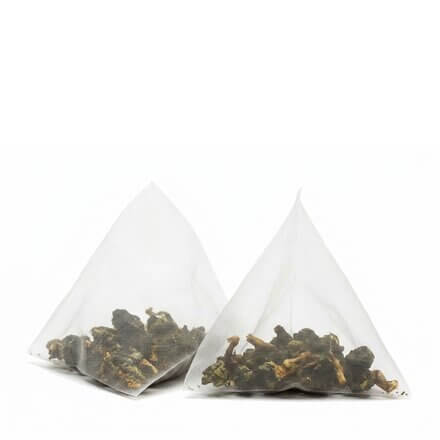
teabags
15 full leaf pyramids
$29
Lore
Formosa, meaning 'beautiful island', is what Dutch traders called Taiwan. The teas grown here, mainly north of Taipei, continue to be called as such. Tea can be harvested up to six times a year here, although the high mountain teas may be only twice a year. Oolong tea had been a very important export for the island until the 1980s, until tea growers turned their focus to the legions of oolong fans living on the island. Today, oolong tea is mainly produced for tea lovers in Taiwan, and the rarest, most prized lots are extremely difficult to find in the U.S. Tea culture is so alive and well in Taiwan, annual competitions are held amongst tea growing districts to reward the most outstanding oolongs each year. Gold medal-winning oolongs are some of the most expensive in the world.
Questions and Answers
Ask a question about ali shan and have the Adagio Teas community offer feedback.
How much is in the portion?
Asked by April Burton
on April 22nd, 2026
on April 22nd, 2026
What Is Ali Shan Tea?
Ali Shan tea (阿里山茶) is a high mountain oolong from the Ali Shan (Alishan) mountain range in Chiayi County, central Taiwan — one of the most celebrated oolong growing regions in the world. Ali Shan is a Gao Shan oolong (高山茶, literally "high mountain tea"), the designation given to Taiwanese oolongs grown at elevations above approximately 1,000 meters where the growing conditions produce the specific quality characteristics that define this style.
Ali Shan oolong is a single-ingredient tea — pure oolong, no flavourings, no additions. Everything in the cup comes from the tea plant itself, the altitude, the mountain air, and the craftsmanship of the farmers who grow and process it. It is one of the most sought-after and most specifically valued oolong styles in the world, and among the most difficult to source authentically in the United States.
Ali Shan Mountain: The Terroir That Makes This Tea
The Ali Shan mountain range rises above 2,000 meters at its highest peaks in central Taiwan's Chiayi County. The tea gardens on Ali Shan's slopes sit between 1,000 and 1,600 meters — high enough for the altitude effects that define Gao Shan quality, but accessible enough for the agricultural infrastructure that premium oolong production requires.
The growing conditions at this altitude produce tea with specific qualities that lower-altitude cultivation cannot replicate:
- Slow growth in cool air — temperatures at 1,000m+ slow the tea plant's growth rate significantly. Slower growth concentrates the natural sugars, amino acids, and aromatic compounds in each leaf — more flavour precursors per gram of leaf than faster-growing lowland tea.
- Morning mist and cloud cover — Ali Shan's characteristic morning mist diffuses sunlight reaching the tea plants, reducing photosynthesis slightly and reducing the development of catechins (bitter compounds) while preserving the amino acids that produce sweetness and umami. The mist also maintains the humid conditions that high mountain oolong's delicate flavour development requires.
- Large diurnal temperature swings — cool nights and warmer days on the mountain create temperature stress that produces the aromatic compound profile responsible for Ali Shan's honey, orchid, and spring grass character. No other growing condition produces this specific aromatic combination.
- Twice-yearly harvest maximum — at these altitudes, tea can be harvested only twice per year compared to up to six times for lowland Taiwan tea. The scarcity of harvest windows is part of why authentic Gao Shan oolong commands premium prices and is "extremely difficult to find in the U.S." as the Lore section notes.
Ali Shan Tea Flavour Profile
- Honey — the primary sweetness note, immediately present from the first sip. Not the confectionery sweetness of a flavoured tea or the molasses depth of an Assam — the specific, refined sweetness of high mountain oolong: natural, multi-layered, and distinctly floral in its undertone. The honey character of authentic Gao Shan oolong is one of the most sought-after flavour qualities in the tea world.
- Orchid — the floral dimension that gives Ali Shan its characteristic aromatic complexity. Unlike the wisteria-camellia florals of Jade Oolong's lighter style, Ali Shan's orchid note is richer, warmer, and more sustained. The orchid quality is the reason tea competitions in Taiwan award medals specifically for this aroma characteristic — it is considered the defining mark of quality in high mountain Taiwanese oolong.
- Spring grass — a clean, fresh, slightly vegetal note that provides the brightness in the overall profile. The spring grass dimension is what gives Ali Shan its "light" quality despite its honey and orchid depth — a counterbalance that keeps the cup feeling alive rather than heavy.
- Buttery finish — the soft, smooth, slightly fatty quality at the close of each sip. Buttery in the sense of texture and warmth rather than literal dairy flavour — the result of the high L-theanine content of high mountain oolong and the specific amino acid profile that slow mountain growth produces.
- Light, creamy, quietly complex — the overall character. Ali Shan is not an assertive or dramatic tea. It rewards slow, attentive drinking rather than functional consumption. The complexity reveals itself gradually across the cup and across multiple steepings rather than arriving all at once in the first sip.
Formosa: Why Taiwan's Tea Has Two Names
The Lore section notes that "Formosa, meaning 'beautiful island,' is what Dutch traders called Taiwan" — and that the teas grown here "continue to be called as such." This naming history is worth understanding for any tea buyer who encounters "Formosa oolong" and "Taiwan oolong" used interchangeably:
When Portuguese sailors first sighted the island in 1542, they reportedly called it "Ilha Formosa" — "beautiful island" in Portuguese. The Dutch East India Company later controlled part of the island during the 17th century, and the "Formosa" name became the Western standard designation for the island and its products. When Taiwan's tea began reaching Western markets in the 19th century, it was sold as "Formosa oolong" — a designation that persisted in Western tea trade long after Taiwan itself had moved on from the colonial name.
Today "Formosa oolong" and "Taiwan oolong" are used interchangeably in Western tea culture. Both refer to the same island's tea. Ali Shan Tea is both a Formosa oolong and a Taiwan oolong — the same tea, two names, one extraordinary island.
Taiwan's Oolong Competitions: The Gold Medal Standard
The Lore section references Taiwan's annual tea competitions — and they are worth understanding as context for why Ali Shan occupies the position it does in the oolong world:
Taiwan holds formal annual competitions among tea-growing districts to identify the most outstanding oolongs of each season. These competitions involve blind tasting by panels of professional tea evaluators who score entries on aroma, flavour, colour, appearance, and overall quality. The winners receive formal gold, silver, and bronze medals — and the gold medal lots are sold at prices that bear no relationship to standard retail tea pricing.
Competition-grade gold medal Ali Shan oolong is among the most expensive teas in the world when it appears. Adagio's Ali Shan does not claim competition-medal status — it is sourced from the Ali Shan growing region at a quality level that delivers the defining Gao Shan character at a price point that allows regular drinking rather than occasional ceremony. The 91¢/cup 3oz pouch and the second-steep potential together make