93
white peony tea
based on 1683 reviews
Your savings will grow with each shipment. Save 5% now, and up to 15% in the future. Please select size:
sample
makes 5 cups
$3
1oz
64¢ per cup
$8
8oz
24¢ per cup
$24
teabags
15 full leaf pyramids
$8
White Peony (白牡丹, Bái Mǔ Dān, also known as Pai Mu Tan or Bai Mu Dan, all meaning "peony") is a sweet, mild Chinese white tea from Fuding in Fujian province, called "the hometown of white teas," made from unopened tea buds as well as the two youngest, most tender top leaves to sprout. The freshly harvested leaves are allowed to wither dry in the sun, a natural oxidation that gives White Peony its plush melon flavour and rounded mouthfeel typical of Fujian white teas. One season only, in spring.
The liquor is golden and bright. The nose is warm, floral and rich like fruit blossoms. Clean, succulent floral-fruit flavour, melon sweetness, a touch of gentle savoriness, and a rounded velvety mouthfeel. White Peony's combination of bud and leaf gives it more body and character than bud-only Silver Needle, while preserving the lightness and delicacy that makes white tea what it is. The ideal introduction to white tea — and to fine Chinese tea in general.
The liquor is golden and bright. The nose is warm, floral and rich like fruit blossoms. Clean, succulent floral-fruit flavour, melon sweetness, a touch of gentle savoriness, and a rounded velvety mouthfeel. White Peony's combination of bud and leaf gives it more body and character than bud-only Silver Needle, while preserving the lightness and delicacy that makes white tea what it is. The ideal introduction to white tea — and to fine Chinese tea in general.

TEA TYPE
White Tea

CAFFEINE
Low
White tea is often a lighter caffeine choice, offering a delicate lift without the intensity of black tea or coffee.

STEEP
180° for 3 mins
Use a gentle steep to bring out the tea's delicate aroma and soft finish.
Customer Reviews (1683)
Teabags
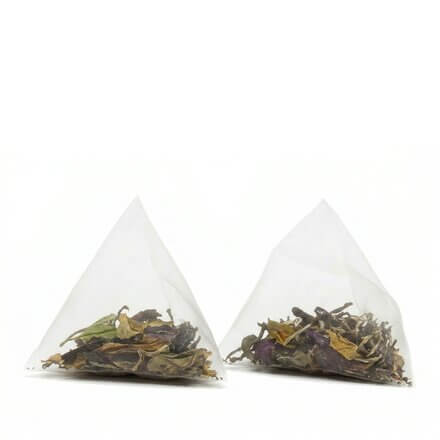
teabags
15 full leaf pyramids
$8
Lore
Grown only for one season in Fuding, the hometown of white teas, White Peony is made of unopened leaf buds and the two youngest, most tender top leaves. They undergo natural oxidation in the sun, which contributes to the plush melon flavor and rounded mouth feel typical of Fujian Province white teas. The leaf buds and leaves, called Pai Mutan or Bai Mu Dan in Chinese, translates to Peony. For a lovely, entertaining tea experience, brew in a glass cup or glass to view the leaves and buds unfurling. A great way to appreciate the color of the infusion.
Questions and Answers
Ask a question about white peony and have the Adagio Teas community offer feedback.
How much caffeine is in this tea?
Asked by Amber Anderson
on December 3rd, 2022
on December 3rd, 2022
Meet our white peony farmer, Wang Hong
To ensure the best quality and value, we import our teas directly from the countries in which they are grown, working closely with the farmers who tender them. Our Roots Campaign connects our customers with the rich stories and the farmers behind some of our most popular teas.
How long have you been growing tea and what got you started?
“I began to work with tea when I was 20. Now I have 20 years of experience. It is a family business. I was influnced by my parents when I was a little girl.”
Can you describe a typical day out in the field?
“Normally I will get up at 6. After a simple breakfast I will go to the tea mountain. My main job is picking. After picking I will send the tea leaves to our village factory for production. Normally I will go back home around 9 to 10 in the evening. But my main working season is in Spring. Because we only make one season for white tea.”
What is your favorite part of growing tea?
“I love the picking in the beautiful green mountain. I love to sing a song while picking. I do enjoy the fresh spring morning.”
What Is White Peony Tea?
White Peony Tea (白牡丹, Bái Mǔ Dān — also romanised as Bai Mu Dan and Pai Mu Tan) is a Chinese white tea produced in Fuding county (福鼎) of Fujian province — the city widely considered the birthplace and heartland of Chinese white tea, referred to in the Lore section as "the hometown of white teas." Where Silver Needle uses only the single unopened bud, White Peony expands the harvest standard to include the bud and the two youngest, newest leaves to sprout alongside it — a "one bud, two leaves" standard that produces a more full-bodied cup with more character and colour than bud-only white tea, while retaining the delicate, low-caffeine, minimally processed character that defines the white tea category.
White Peony is the most widely sold and most accessible Chinese white tea in the world. More than Silver Needle's prestige positioning, White Peony is the everyday white tea — the tea that introduces more buyers to the white tea category than any other, at a price (24¢/cup from the 8oz pouch) that makes regular drinking practical rather than occasional.
The Name: Why This Tea Is Called White Peony
White Peony's Chinese name — 白牡丹 (Bái Mǔ Dān) — translates directly as "White Peony." The name describes the visual appearance of the finished tea when brewed in a glass vessel: the combination of a silver-white bud and the two flanking green leaves, opened and floating in the water, has been compared to a white peony flower in bloom. The bud provides the central white element; the two opened leaves spread around it like petals.
The tea appears under three different romanisations in Western markets — all three refer to the identical tea:
- Bai Mu Dan — the Pinyin romanisation of 白牡丹, the modern standard Chinese romanisation system
- Pai Mu Tan — an older Wade-Giles romanisation system widely used in earlier Western tea literature and still appearing on many product labels
- White Peony — the direct English translation, used interchangeably with both Chinese romanisations
Any buyer searching for "Bai Mu Dan tea," "Pai Mu Tan tea," or "White Peony tea" is looking for exactly the same product.
Fuding: The Hometown of White Teas
Fuding (福鼎) in northern Fujian province is the most celebrated origin for Chinese white tea — referred to in the Lore section as "the hometown of white teas," a designation that reflects both historical primacy and current production quality. The same Fuding county that produces Adagio's Silver Needle also produces White Peony, and the two share the specific terroir — high elevation, consistent maritime humidity, mineral-rich soil — that Fujian Province white teas are known for.
White Peony is grown only for one season per year, in spring, when the tea plants produce their first flush of new growth. The brief spring harvest window — typically a few weeks in March and April — produces all the White Peony available from that year's crop. No second-season White Peony is produced at the Fuding standard. The spring-only, single-season harvest is why authentic Fuding White Peony has the character it does: the freshest possible new growth, the highest amino acid concentration of the year, the most natural sweetness before summer's heat accelerates the development of more astringent compounds.
White Peony vs. Silver Needle: The Two Adagio White Teas
White Peony and Silver Needle are both Fuding, Fujian white teas — from the same hometown, the same harvest tradition, the same farmers' hands. The difference is harvest standard and the character that produces:
- Silver Needle (Bai Hao Yin Zhen) (scored 95, 1,530 reviews, from 74¢/cup) — bud only. The single unopened tip, nothing else. Pale ivory liquor, delicately honeysuckle floral, warmed sugar sweetness, airy and ethereal. Each infusion more floral than the last. The most precious and most expensive white tea. For meditative, attentive drinking. See Silver Needle.
- White Peony (Bai Mu Dan) (scored 93, 1,683 reviews, from 24¢/cup) — bud plus two young leaves. More body, more character, deeper melon and fruit blossom flavour. Golden liquor (darker than Silver Needle's ivory). Still low caffeine, still delicate, still the white tea category — but with more to drink.
The practical guide: Silver Needle for the most precious, most purely delicate white tea experience; White Peony for the everyday white tea that delivers the full character of Fuding's white tea tradition at a price that makes daily drinking possible. Many white tea enthusiasts keep both: Silver Needle for occasions that merit the full ceremonial attention, White Peony as the regular daily cup. At 24¢/cup vs 74¢/cup, the price difference alone justifies keeping both.
White Peony Tea Flavour Profile
- Melon sweetness — the most distinctive quality of White Peony, produced by the natural sun oxidation during withering. The melon character is warm and plush rather than fresh and watery — closer to the warm, sweet, slightly concentrated flavour of a ripe Canary melon or honeydew in the sun than to the crisp freshness of fresh-cut melon. The Lore section identifies this specifically as the "plush melon flavour" from the Fuding sun-withering process.
- Fruit blossom florals — the defining aromatic quality. Not as purely honeysuckle as Silver Needle — the two-leaf component adds complexity and rounds the floral character into something closer to the mixed fragrance of an orchard in spring bloom: fruit blossoms of multiple kinds, warm and rounded, without the singular focus of Silver Needle's honeysuckle.
- Light wood note — reviewers identify a gentle, barely-there woody quality from the slightly more mature leaf material (the two young leaves alongside the bud) that Silver Needle's bud-only composition doesn't produce. Present as a background depth note rather than a dominant quality.
- Subtle mineral — the terroir of the Fuding high-mountain growing area, present as a clean mineral undertone that grounds the melon and floral character and prevents the cup from being purely sweet.
- Velvety, smooth mouthfeel — the review community's most consistent textural descriptor. Fuller and rounder than Silver Needle's airy delicacy — the two-leaf component adds body that the bud alone doesn't produce, creating a more substantial, more enveloping mouthfeel while retaining the low-astringency smoothness characteristic of Fuding white tea.
- Golden, bright liquor — distinctly golden rather than Silver Needle's pale ivory. The two-leaf component and its slightly more oxidised character during sun withering produces the warm golden colour visible in the cup. In a glass vessel, the combination of large, partially unfurled leaves and a warm golden liquor is one of the most appealing visual presentations in the white tea range.
The Sun Withering: Why White Peony's Oxidation Comes from the Sky
White Peony's flavour character — particularly the plush melon quality — comes from a processing step unique in the tea world: natural sun withering. Unlike green tea's deliberate kill-green step that halts oxidation immediately, or black tea's deliberate full oxidation, White Peony's minimal oxidation happens passively, slowly, outdoors, in the sun.
The freshly harvested buds and leaves are spread in thin layers on bamboo trays or fabric sheets and left to wither in outdoor conditions — sunlight, mountain air, the specific temperature and humidity of the Fuding spring. Over 2–3 days, the leaves slowly lose moisture and undergo a minimal, natural enzymatic oxidation. The sunlight itself contributes to the flavour development: solar radiation interacts with the leaf's natural compounds, producing the warm, plush, fruit-forward melon character that distinguishes sun-withered Fuding white tea from any other processing approach.
No heat intervention, no artificial control. The character of each year's White Peony reflects the specific weather conditions of that spring's withering period — a direct expression of the Fuding mountain environment at the exact time and temperature the tea was made.
How to Brew White Peony Tea
- Water temperature — 180°F (82°C). The same as Silver Needle. The product panel advises "a gentle steep to bring out the tea's delicate aroma and soft finish" — the instruction applies to temperature as much as time. White Peony's white tea character requires gentleness.
- Leaf quantity — one heaping teaspoon (2–3g) per 6–8oz. White Peony's large, open leaves look more voluminous than they weigh; measuring by weight produces more consistent results.
- Steep time — 3 minutes. Longer than most green teas but gentle in temperature — the combination produces the full melon and floral character without bitterness. White Peony at 180°F for 3 minutes is one of the most forgiving teas to brew in the Adagio catalog.
- Glass vessel — strongly recommended. The Lore section specifically notes: "For a lovely, entertaining tea experience, brew in a glass cup or glass to view the leaves and buds unfurling. A great way to appreciate the colour of the infusion." The large leaves and bud unfurling in a glass vessel — creating the white-peony-in-bloom visual the name describes — is one of the most distinctive visual steeping experiences in the white tea range.
- Multiple steepings — White Peony yields 3–4 quality steepings. The melon and fruit blossom character is most vivid in the first steep; the second steep shows more of the mineral and woody depth; the third is lighter and more purely delicate. Reviewers consistently note good resteeping performance.
- With honey — a small amount of raw honey complements the melon sweetness naturally, amplifying the warm fruit character without adding anything foreign to the flavour register.
White Peony Tea Caffeine Content
White Peony contains approximately 10–25mg of caffeine per 8oz cup — at the lower end of the Adagio catalog, in the "Low" caffeine category that the product panel confirms. The low caffeine results from several compounding factors: the minimal processing (no kill-green, no rolling, no firing) that extracts caffeine less aggressively than intensive processing; the large leaf structure that extracts more slowly than small or broken leaf; and the gentle 180°F brewing temperature. L-theanine content remains elevated in the spring-harvested material, contributing the characteristic smooth, calming quality that makes white tea an afternoon and evening option. White Peony is appropriate at any hour — morning, afternoon, or evening — for most drinkers managing caffeine intake.
White Peony and White Tea: The Accessible Entry Point
The product description identifies White Peony as "the ideal introduction to white tea — and to fine Chinese tea in general." This is accurate and worth expanding:
White Peony is the white tea that converts the most buyers to the white tea category because it delivers more of what buyers expect from a premium tea (body, colour, character in the cup) than bud-only Silver Needle, while delivering the low-caffeine, low-astringency, delicate floral character that defines white tea's appeal. A buyer new to white tea who starts with Silver Needle risks finding it too light, too subtle, and too expensive for a first encounter. A buyer who starts with White Peony gets melon sweetness, golden colour, fruit blossoms, and a velvety mouthfeel at 24¢/cup — a complete and satisfying cup that explains immediately why white tea has its own devoted following.
White Peony Tea as a Gift
White Peony is the most universally accessible and most warmly received white tea gift in the Adagio collection. The combination of the beautiful name (White Peony / Bai Mu Dan), the large unfurling leaves in a glass vessel (visually immediately appealing), Wang Hong's singing-on-the-mountain farmer story, and the 1,683 reviews at 93 make it a gift that works for virtually any recipient who drinks tea.
Available in a sample ($3, 5 cups), 1oz ($8, 12 cups, 64¢/cup), 8oz ($24, 100 cups, 24¢/cup), and pyramid teabags ($8, 15 bags). The 1oz pouch at $8 is the ideal gift size — the large, beautiful leaf material is impressive on opening, the price is accessible, and the volume is right for exploring multiple steepings. For the complete white tea exploration, pair with Silver Needle — the two Fuding white teas together demonstrate the full character spectrum of Fuding's white tea tradition, from Silver Needle's ethereal delicacy to White Peony's fuller, more accessible warmth.
Buy White Peony Tea Online
Order White Peony loose leaf tea online — Bai Mu Dan, Pai Mu Tan, white tea from Fuding, Fujian province, China (白牡丹), scored 93 by 1,683 customers, from 24¢ per cup. Free shipping on qualifying orders. Available in sample, 1oz, and 8oz loose leaf pouches and pyramid teabag format. Delivered from Adagio's New Jersey warehouse within one business day.