94
gyokuro tea
based on 929 reviews
Your savings will grow with each shipment. Save 5% now, and up to 15% in the future. Please select size:
sample
makes 5 cups
$9
4oz
68¢ per cup
$34
16oz
42¢ per cup
$84
teabags
15 full leaf pyramids
$34
Gyokuro (玉露, gyokuro — "jade dew") is a shade-grown steamed green tea from Japan, considered among the finest of all Japanese teas. While the young leaves of the spring season develop, Gyokuro plants are shaded from the sun for three to four weeks using covers called Komo. This deliberate light deprivation slows leaf growth and transforms the tea's character completely: the sun-deprived leaves produce more chlorophyll — explaining their vivid, deep green colour — and significantly more amino acids, most notably L-theanine, which accounts for Gyokuro's perfectly smooth, rich, and soft flavour that is unlike any unshaded green tea.
Our fine Gyokuro produces a deeply sweet aroma of freshly buttered greens and seaweed — not grassiness, not harshness, nothing sharp. Think of tender new grass just sprouting in the spring. Soft on the palate with a rich umami quality, balanced delicate finish, and a silky mouthfeel that reviewers consistently describe as the smoothest green tea they have encountered. Energising and soothing simultaneously.
Our fine Gyokuro produces a deeply sweet aroma of freshly buttered greens and seaweed — not grassiness, not harshness, nothing sharp. Think of tender new grass just sprouting in the spring. Soft on the palate with a rich umami quality, balanced delicate finish, and a silky mouthfeel that reviewers consistently describe as the smoothest green tea they have encountered. Energising and soothing simultaneously.

TEA TYPE
Green Tea

CAFFEINE
Moderate
Green tea usually offers a gentler lift than black tea or coffee, with enough caffeine for a light, refreshing boost.

STEEP
165° for 2-3 mins
Use the shorter steep for a smoother cup; over-steeping may taste bitter.
Customer Reviews (929)
Teabags
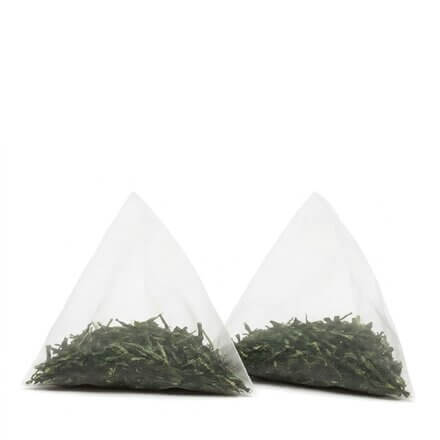
teabags
15 full leaf pyramids
$34
Lore
In Japan, tea is typically grown in two ways. The first is uncovered, which is similar to how most teas are grown. This method results in teas like Sencha, Bancha, and Hojicha. The other method is shade grown, which results in teas used for Matcha, Tencha, Gyokuro, and Kabuse. So, what's the difference between them? It all depends on how long the tea is covered, with Matcha and Tencha teas covered longest, then Gyokuro, and finally Kabuse. Shade grown teas are known for their increased chlorophyll, theanine, and amino acids, and are considered some of Japan's finest teas.
Questions and Answers
Ask a question about gyokuro and have the Adagio Teas community offer feedback.
How does Gyokuro compare to sencha(overture) in taste?
Asked by Chad Thompson
on January 25th, 2020
on January 25th, 2020
How much water is needed for proper brewing? I've been using 8 oz per packet, but some teas seem very weak.
Asked by Rebecca M
on July 3rd, 2020
on July 3rd, 2020
What exactly does 'multiple infusions' mean in relation to this tea?
Asked by Patricia Roker
on May 9th, 2024
on May 9th, 2024
Meet our gyokuro farmer, Nagashima Takehisa
To ensure the best quality and value, we import our teas directly from the countries in which they are grown, working closely with the farmers who tender them. Our Roots Campaign connects our customers with the rich stories and the farmers behind some of our most popular teas.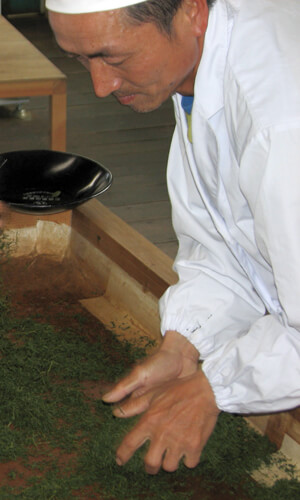
How long have you been growing tea?
“About 50 years. I have been involved in agriculture, especially in green tea fields ever since I graduated from an agricultural high school.”
What got you started in the Tea industry?
“I was the firstborn son of a green tea farming family, so it was a natural choice. Mainly I have been growing green tea, and I also grow Gyokuro.”
Can you describe a typical day out in the field. How many hours would that be?
“To growing Gyokuro, we start out by making shade coverings called "Komo" which is made of black polyester mesh. When green tea bushes' buds start coming out in April, we start putting covering on the frames over the tea bushes. After about 10 days, we cover with two layers, and cut the sun rays by 95%, and we pick them in 20 days.
We pick them by hand, so an adult could only pick 10kg of tea leaves working from 6AM till 6PM. Then finished tea will come out only 2kg. We cannot pick tea leaves on rainy days. After air-dry the leaves in bamboo containers, we start processing them 5AM next morning.”
We pick them by hand, so an adult could only pick 10kg of tea leaves working from 6AM till 6PM. Then finished tea will come out only 2kg. We cannot pick tea leaves on rainy days. After air-dry the leaves in bamboo containers, we start processing them 5AM next morning.”