96
irish breakfast tea
based on 6244 reviews
Your savings will grow with each shipment. Save 5% now, and up to 15% in the future. Please select size:
sample
makes 10 cups
$4
3oz
24¢ per cup
$9
16oz
15¢ per cup
$29
portions
Teforia-ready
$9
teabags
15 full leaf pyramids
$9
Our full-leaf Irish Breakfast combines hearty black teas from Ceylon (Sri Lanka) and Assam (India) to get your morning off to a bright start. As its name implies, the Irish Breakfast black tea blend is an ideal accompaniment to a morning meal. It seamlessly blends the citrusy notes of a high-grown Ceylon with the malty underscore of a pungent Assam. Spicy and jammy aroma on the leaf, malty and deep flavor with a brisk and 'buzzy' mouthfeel. Rounded sweetness in the finish. May be enjoyed plain or with a drop of milk. Irish Breakfast is one of Adagio's most popular teas.
Black Tea | High caffeine | Steep at 212° for 3-5 mins
Ingredients: assam melody tea & ceylon sonata tea
Customer Reviews (6244)
Teabags
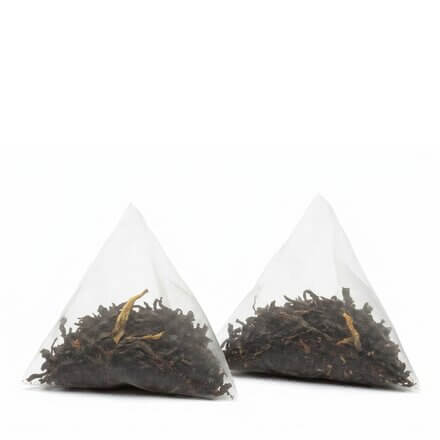
teabags
15 full leaf pyramids
$9
Iced Teas
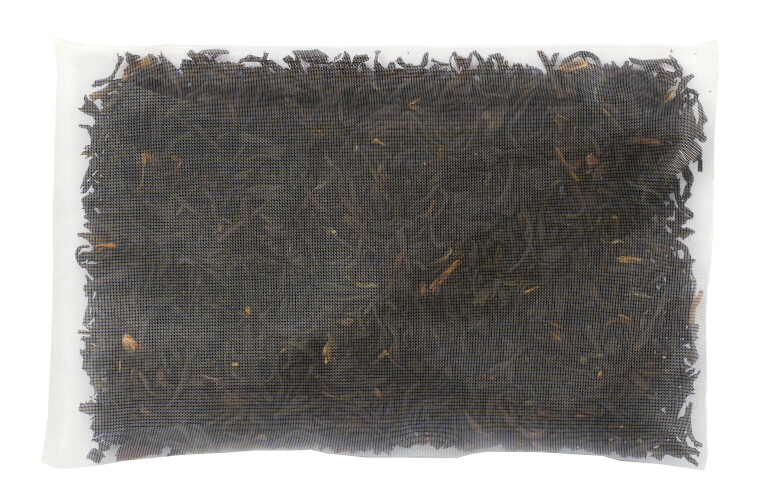
6 quarts
6 x quart-sized pouches
$7
Fresh Portions
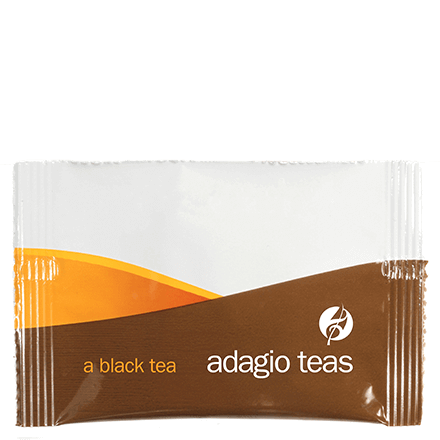
irish breakfast
portions
Teforia-ready
$9
Ingredients & Lore
Top of the morning is a salutation which offers the "best of the morning". There's a bit of mystery as to where the term comes from though, which could be referring to the "top" as the best, as the beginning of the morning, or, our personal favorite, as a nod to cream, which rises as the "best" to the top of fresh milk. While the phrase isn't commonly used by Ireland natives today (as the second highest per-capita tea drinkers in the world) their favorite blend clearly is.

assam melody tea

ceylon sonata tea
Part of teas of India and Sri Lanka sampler
Indian and Sri Lankan
will make 40 cups
$14
Questions and Answers
Ask a question about irish breakfast and have the Adagio Teas community offer feedback.
What is mg of caffeine?
Asked by Chrissy Borntrager
on November 18th, 2016
on November 18th, 2016
I'm new to loose leaf teas. When they say on the directions 1 cup do they mean 8oz or a coffee cup?
Asked by Gerald Miller
on January 2nd, 2018
on January 2nd, 2018
I found a pouch of my tea that I didn't know I had. It's never been opened and have had it for a few years now. Is it still going to be fresh and still taste ok? Thanks
Asked by Teresa Nolting
on October 13th, 2017
on October 13th, 2017
How many steepings can you get with this for a 16-oz steeper. 2 teaspoons.
Asked by Ian Wilz
on December 16th, 2017
on December 16th, 2017
Can I use this loose tea to make iced tea?
Asked by Tim Doebler
on September 7th, 2017
on September 7th, 2017
I'm new to loose leaf teas. When they say on the directions 1 cup do they mean 8oz or a coffee cup?
Asked by Gerald Miller
on January 2nd, 2018
on January 2nd, 2018
What are the calories in the tea?
Asked by tammy mowery
on May 1st, 2020
on May 1st, 2020
How does the Irish Breakfast tea taste different than Scottish Breakfast?
Asked by Sher Coats
on February 17th, 2023
on February 17th, 2023
How much does a portion make
Asked by Vince Brown
on October 4th, 2024
on October 4th, 2024
Direct Trade Advantage
We import directly from the artisan farmers whose names and faces you'll find throughout our website.
This makes our products fresher than those offered by the companies who use middlemen and brokers, and also less expensive.
Here's a comparison of how much more you'd be paying by buying this elsewhere:
David's Tea:
72% more expensive
What Is Irish Breakfast Tea?
Irish Breakfast is a black tea blend — typically more robust and more heavily weighted toward Assam than English Breakfast — designed for the Irish tradition of drinking strong tea with milk throughout the day. Ireland is the second-highest per-capita tea consuming nation in the world after Turkey, and the Irish preference for a bold, strong cup has historically shaped Irish Breakfast toward a more assertive profile than the Keemun-based English Breakfast from which it descends.
Adagio's Irish Breakfast is blended from two named single-origin teas: Assam Melody from the Brahmaputra River valley in northeastern India and Ceylon Sonata from the highlands of Sri Lanka. The Assam provides the malty, pungent backbone; the Ceylon provides brightness, citrus character, and the brisk astringency that makes Irish Breakfast feel alive in the cup rather than flat. The combination produces a blend that is more complex than a pure Assam and more robust than a pure Ceylon.
Irish Breakfast Tea Flavor Profile
- Body — full and robust. The strongest body of the three breakfast teas in the Adagio collection. Holds up to substantial amounts of milk without becoming thin or washed out.
- Malt — the dominant Assam character produces a deeply malty flavor that makes Irish Breakfast feel more substantial than lighter breakfast blends. This is the malt of a proper Assam — not a generic "strong tea" character but a specific, recognisable quality.
- Brisk and buzzy mouthfeel — the Ceylon component adds a lively, citrus-edged astringency that the existing description calls "buzzy." This is the quality that makes Irish Breakfast feel energising rather than merely strong — the mouthfeel has physical presence.
- Spicy and jammy aroma — the dry leaf has a characteristic aroma that is more complex than a standard breakfast tea: a slight spiciness from the Assam and a jammy fruitiness from the Ceylon interaction.
- Rounded sweetness in the finish — despite the bold character, Irish Breakfast finishes with a natural sweetness rather than harsh bitterness. This is the quality of well-sourced, properly processed Assam and Ceylon rather than lower-grade fannings.
Irish Breakfast vs. English Breakfast vs. Scottish Breakfast
The most commonly searched comparison in the Adagio breakfast tea range:
- Irish Breakfast (scored 96, 6,229 reviews) — the boldest, most assertive, most malt-forward of the three. Assam and Ceylon blend. For anyone who wants maximum strength with character to match. Most-reviewed breakfast tea in the Adagio catalog.
- English Breakfast (scored 94, 2,155 reviews) — Keemun-based, slightly smoky, honeyed, and more refined than Irish Breakfast. The original breakfast tea style, closer to tradition. For anyone who wants complexity alongside strength.
- Scottish Breakfast (scored 97) — the highest-rated breakfast tea at Adagio. Bold and full-bodied with a clean, rounded malt character that suits everyday drinking without the more assertive buzz of Irish Breakfast. For most buyers choosing between the three, Scottish Breakfast is the answer. Irish Breakfast is the right choice when you specifically want the most robust, most Assam-forward option.
Irish Breakfast Tea with Milk
Irish Breakfast is designed for milk — more specifically, for the kind of milk-forward cup that the Irish tea-drinking tradition developed around. A few practical notes for getting the most from the combination:
- How much milk — Irish Breakfast can take more milk than most black teas without losing its character. Start with a small splash (10–15ml) and increase to preference. The boldness of the Assam base means the tea maintains its identity with significant milk addition.
- When to add milk — after removing the infuser and allowing the tea to steep fully. Adding milk before steeping or during steeping dilutes the extraction and produces a weaker, less flavourful cup.
- Type of milk — whole dairy milk is the traditional choice for Irish breakfast tea and produces the richest, most rounded result. Oat milk works well as an alternative — its natural sweetness complements the malt. Skimmed milk is less satisfying because the reduced fat content makes the milk feel thin against the bold tea character.
- Sugar — Irish tea culture is not averse to a small amount of sugar in a strong tea. A teaspoon of raw cane sugar or white sugar added after the milk integrates smoothly with the rounded finish.
How to Brew Irish Breakfast Tea
- Water temperature — 212°F (100°C), fully boiling. Irish Breakfast requires boiling water — the Assam base needs full heat for proper extraction of its malt character.
- Leaf quantity — one heaping teaspoon (2–3g) per 8oz cup. Irish Breakfast drinkers who prefer a stronger cup can use up to 4g per 8oz — the blend handles the higher leaf ratio well.
- Steep time — 4–5 minutes for the full bold Irish Breakfast character. 3 minutes produces a lighter cup that emphasises the Ceylon citrus character; 4–5 minutes brings out the full Assam malt depth.
- Multiple steepings — Irish Breakfast yields a solid second steeping from a single measure of leaves. The second steep is lighter and emphasises the Ceylon brightness over the Assam malt.
Irish Breakfast Tea Caffeine Content
Irish Breakfast contains approximately 50–70mg of caffeine per 8oz cup at standard brewing — toward the higher end for black tea, and toward the top of that range when brewed for the full 5 minutes at the higher leaf ratio that Irish Breakfast drinkers often prefer. Compared to:
- A standard cup of coffee — approximately 95–200mg
- English Breakfast brewed 3 minutes — approximately 40–55mg
- Irish Breakfast brewed 5 minutes with 3g leaves — approximately 55–70mg
For a caffeine-free alternative that retains the full-bodied, milk-friendly character of Irish Breakfast, Adagio's Decaf Breakfast uses CO2 decaffeination to preserve the breakfast tea character at 2–5mg residual caffeine per cup.
Irish Breakfast Tea and the Irish Tea Tradition
Ireland's relationship with tea is genuinely distinctive — the country is the world's second-highest per-capita tea consumer, ahead of the UK and significantly ahead of most other tea-drinking nations. The preference for a bold, strong cup brewed with milk has shaped the Irish Breakfast style over generations: stronger than English Breakfast, more milk-forward than Darjeeling, and more practically functional than the delicate single-or