95
masala chai tea
based on 4759 reviews
Your savings will grow with each shipment. Save 5% now, and up to 15% in the future. Please select size:
sample
makes 10 cups
$4
3oz
27¢ per cup
$10
16oz
17¢ per cup
$34
portions
Teforia-ready
$9
teabags
15 full leaf pyramids
$10
Our Masala Chai tea blend combines premium Ceylon black tea with cardamom, cloves, ginger, and cinnamon — the four spices at the core of the traditional masala chai preparation that has been a staple of Indian daily life since the early 20th century. In Indian culture, "masala" means "a blend of spices" and "chai" simply means "tea" — so Masala Chai is, literally and accurately, spiced tea. Our interpretation stays true to its definition: a warm and inviting fragrance, a zesty, invigorating spice character across the whole cup, and an aromatic finish that lingers.
The full spice blend — cardamom's floral warmth, cloves' depth and slight heat, ginger's bright zing, and cinnamon's sweet spice — produces a cup that is more complex and more satisfying than any chai concentrate or pre-made chai mix. No artificial shortcuts: real whole and ground spices blended with full-leaf Ceylon black tea, ready for the preparation that suits you best — steeped straight, brewed double-strength for a latte, or cold brewed overnight for an iced chai
The full spice blend — cardamom's floral warmth, cloves' depth and slight heat, ginger's bright zing, and cinnamon's sweet spice — produces a cup that is more complex and more satisfying than any chai concentrate or pre-made chai mix. No artificial shortcuts: real whole and ground spices blended with full-leaf Ceylon black tea, ready for the preparation that suits you best — steeped straight, brewed double-strength for a latte, or cold brewed overnight for an iced chai

TEA TYPE
Black Tea

CAFFEINE
High
Chai tea is naturally caffeinated and known for a stronger, energizing lift, making it a popular coffee alternative.

STEEP
212° for 7-10 mins
Use the longer steep for a fuller, spicier cup that stands up well to milk.

Preparation: We suggest two heaping teaspoons per 8 oz cup. Sugar or milk if desired.

Ingredients: black tea, cardamom, cloves, ginger, natural cinnamon flavor & cinnamon
Customer Reviews (4759)
Teabags
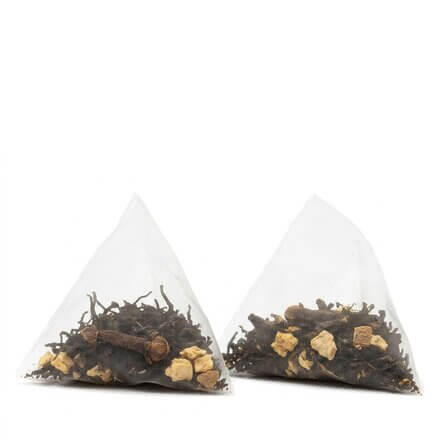
teabags
15 full leaf pyramids
$10
Iced Teas
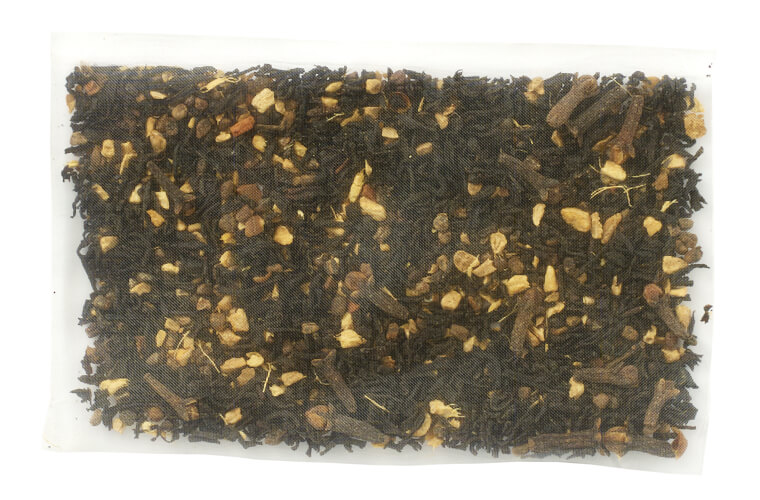
6 quarts
6 x quart-sized pouches
$8
Fresh Portions
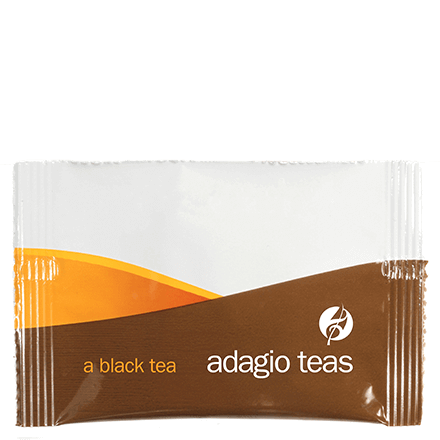
masala chai
portions
Teforia-ready
$9
Ingredients & Lore
In the early 20th century, the Indian Tea Association was looking for ways to popularize tea consumption in India. As such, they encouraged factories and mills to offer tea breaks for their employees, often observing English preparation with milk and sugar added. When they found out vendors were adding higher proportions of spices, milk, and sugar to their chai to reduce the amount of tea they had to purchase however, well, they were a little upset. In this case, however, flavor won out, and chai has been a staple ever since, with countless variations in preparation, spices, and more.

black tea

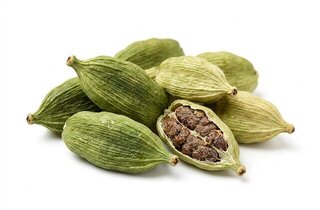
cardamom

cloves

ginger

natural cinnamon flavor

cinnamon
Part of chai teas sampler
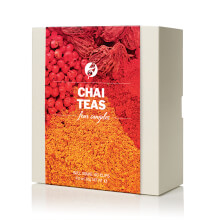
chai teas
will make 40 cups
$14
Questions and Answers
Ask a question about masala chai and have the Adagio Teas community offer feedback.
Is this made with true (Ceylon) cinnamon, or with cassia?
Asked by Jack L Romero
on January 13th, 2017
on January 13th, 2017
On the bag and website it says to steep for 7 to 10 min@212°. Someone on Facebook said that they were told by customer service that it was a mistake and the Masala is to be steeped only for 5min. Is this true?
Asked by Renee Stofanak
on November 23rd, 2019
on November 23rd, 2019
How many mgs of caffeine does this tea contain?
Asked by Ann Marie Sellers
on February 23rd, 2020
on February 23rd, 2020
How does the $34 16 oz. size come packaged? Is it a tin or pouch?
Asked by Potion Maker
on December 12th, 2022
on December 12th, 2022
I love this chai blend! Wondering if anyone can suggest a preparation to make it as an iced chai? I'm feeling like cold tea since it's summertime. TIA!
Asked by Nicole Henning
on July 14th, 2022
on July 14th, 2022
What type of cinnamon is used in masala chia? Thanks!
Asked by Robin Guillot
on June 26th, 2023
on June 26th, 2023
Being new to making chai I'm not sure how much water, milk, sugar, etc. to use in making a 12 oz cup. Can you give me a recipe for this?
Asked by Sandra Farrar
on March 23rd, 2025
on March 23rd, 2025
Chai tea simmer in water or milk?
Asked by Darlene Dexter
on September 3rd, 2025
on September 3rd, 2025
Direct Trade Advantage
We import directly from the artisan farmers whose names and faces you'll find throughout our website.
This makes our products fresher than those offered by the companies who use middlemen and brokers, and also less expensive.
Here's a comparison of how much more you'd be paying by buying this elsewhere:
David's Tea:
294% more expensive
What Is Masala Chai Tea?
Masala Chai is a traditional Indian spiced tea — black tea brewed with a combination of warming spices (the masala) that varies by region, household, and personal tradition across India. The word "masala" (मसाला) means "blend of spices" in Hindi and Urdu; "chai" (चाय) is simply the word for tea in Hindi, derived from the Chinese "cha" (茶). Masala Chai, therefore, is "spiced tea" — a description that has been applied to thousands of variations across India for well over a century.
Adagio's Masala Chai uses Ceylon black tea as its base — the same bright, full-bodied Sri Lankan black tea that forms the foundation of the entire Adagio flavoured tea collection — with a four-spice blend of cardamom, cloves, ginger, and cinnamon. The combination produces the warm, inviting, invigorating character that has made masala chai one of the most consumed hot beverages in the world.
The History of Masala Chai in India
Masala chai's path from a traditional Ayurvedic spiced beverage to a national daily staple passed through one of the more ironic episodes in the history of commercial tea:
In the early 20th century, the Indian Tea Association — a body funded by British tea interests — was looking for ways to popularise tea consumption in India. They encouraged factories, mills, and other workplaces to offer tea breaks for their employees, observing the English preparation of tea with milk and sugar. The plan was working, until they discovered that Indian vendors were adding higher proportions of spices, milk, and sugar to their chai — reducing the actual amount of tea used per cup to lower their ingredient costs.
The Indian Tea Association was, understandably, displeased. The vendors were using less tea and more of everything else. What the Association failed to anticipate was that the vendors had, in the process of optimising their costs, accidentally created something better. The spiced, milky, sweet preparation that the Association considered a dilution of proper tea turned out to be vastly more popular than the British-style tea they were promoting. Flavour won the argument. Chai has been a staple ever since.
The current global popularity of masala chai — and of chai lattes in every coffee shop in the Western world — traces directly to this combination of Ayurvedic spice tradition, colonial tea promotion, and Indian vendors who figured out, before anyone was studying the question, that cinnamon, cardamom, ginger, and cloves made black tea more appealing rather than less.
The Four Spices in Masala Chai: What Each Contributes
Masala Chai's character is the sum of four specific spice contributions, each playing a different role in the overall cup:
- Cardamom (इलायची) — the defining flavour of masala chai in most Indian traditions and the spice most responsible for the distinctive aromatic character that distinguishes chai from any other spiced tea. Cardamom's floral warmth — a combination of eucalyptus-like freshness and sweet spice — is what makes a cup of masala chai smell the way it does from across the room. Green cardamom (Elettaria cardamomum) is the variety used in most chai preparations and in Adagio's Masala Chai.
- Cloves (लौंग) — the depth and heat. Cloves contribute a warm, slightly sharp, intensely aromatic quality that gives masala chai its backbone. The eugenol compound in cloves is one of the most potent aromatic compounds in the spice world; a small amount provides significant character. Too much and a chai is dominated by a medicinal sharpness; in the right proportion, cloves add the complexity that makes masala chai more than spiced cinnamon tea.
- Ginger (अदरक) — the brightness and zing. Fresh or dried ginger adds a sharp, warming, slightly citrus-adjacent heat that lifts the overall spice profile and gives masala chai its invigorating quality. The gingerol and shogaol compounds in ginger that produce the warming sensation are also among the most studied for digestive and anti-inflammatory properties — the same properties that made ginger a core ingredient in Ayurvedic medicine long before it entered the chai spice blend.
- Cinnamon (दालचीनी) — the sweet warmth. Cinnamon's familiar, comforting sweetness rounds the spice blend and prevents the cardamom-clove-ginger combination from reading as medicinal or overly sharp. Adagio's Masala Chai uses both natural cinnamon flavour and cinnamon — providing the spice at two levels of intensity and ensuring the cinnamon character is fully present throughout the steeping.
Masala Chai vs. Chai Concentrate: Why Loose Leaf Wins
The vast majority of chai lattes served in coffee shops and cafés worldwide are made from a bottled or carton chai concentrate — a pre-sweetened, pre-spiced liquid that is diluted with steamed milk and served with minimal preparation effort. Chai concentrates have obvious operational advantages in a commercial setting. What they don't have is the flavour of actual spices steeped in actual tea.
The differences are specific:
- Real spices vs flavouring compounds — Adagio's Masala Chai contains whole and ground cardamom, cloves, ginger, and cinnamon. Chai concentrates typically use flavouring compounds or extracts rather than the spices themselves. The difference in aroma is immediate and significant: a pouch of Masala Chai smells like a spice market; most concentrates smell like spiced syrup.
- No added sugar — chai concentrates are almost universally pre-sweetened to a level that makes the customer experience consistent but masks the spice character beneath a baseline sweetness. Adagio's Masala Chai contains no added sugar; the perceived sweetness is the natural character of the cinnamon and Ceylon base. You control the sweetness.
- Cost per cup — at 17¢/cup for the 16oz loose leaf pouch, Adagio's Masala Chai costs a fraction of chai concentrate per serving, produces a cup with more flavour complexity, and requires only slightly more effort than pouring from a carton.
How to Make a Masala Chai Latte
The most popular way to serve Masala Chai outside of India — and the preparation that converts most first-time chai drinkers into regulars:
- Add two heaping teaspoons of Masala Chai to 4oz of boiling water (half the standard liquid amount — this creates a concentrate)
- Steep for 7–10 minutes at 212°F, covered, to develop the full spice character
- Remove the leaves
- Steam or froth 6oz of dairy or oat milk
- Combine the chai concentrate with the frothed milk in a 10–12oz vessel
- Add honey or sugar to taste if desired
The double-strength steeping is what distinguishes a properly made loose leaf chai latte from a watery approximation. At full concentration, the spice character of the cardamom, cloves, ginger, and cinnamon holds up through the milk dilution and produces a chai latte that is genuinely spiced rather than faintly chai-flavoured. Oat milk is the dairy alternative that best amplifies the cinnamon and cardamom notes; whole dairy milk produces the richest, most traditional result.
Masala Chai Cold Brew Iced Tea
Masala Chai cold brewed overnight produces one of the most naturally complex and satisfying iced teas in the Adagio catalog — the cold extraction softens the spice heat while preserving the aromatic complexity, producing a smooth, spiced iced tea with no bitterness and no added sweetener required:
- Add two heaping teaspoons of Masala Chai per 8oz of cold water to a pitcher
- Refrigerate for 10–12 hours
- Strain and serve over ice
For an iced chai latte: cold brew double-strength (two teaspoons per 4oz cold water), strain, and combine with cold oat or dairy milk over ice. The cold brew iced chai latte is one of the highest-margin specialty drinks a café can produce from a loose leaf tea — the ingredient cost is negligible relative to the price that a well-made iced chai latte commands on a café menu. See the cold brew chai teas collection for pre-portioned cold brew options.
Masala Chai Flavour Profile
- Warm, inviting fragrance — the defining first impression. The dry leaf smells of cardamom and cinnamon from the moment the pouch opens — a spice-market warmth that is one of the most immediately appealing aromas in the tea collection. The aroma of steeping Masala Chai in a kitchen is genuinely pleasant enough to be its own argument for brewing a cup.
- Zesty, invigorating spice character — the cup is assertively spiced throughout, with no single spice dominating. The cardamom's floral warmth, ginger's bright heat, cloves' depth, and cinnamon's sweet roundness layer over each other across the steeping rather than presenting one at a time.
- Full-bodied Ceylon base — the Ceylon black tea provides the structure and caffeine that make Masala Chai work as a morning cup. Without a properly bold base, the spices would float without support; the Ceylon grounds the blend and makes it a proper tea latte base.
- Aromatic, lingering finish — the cardamom and cinnamon character persists in the aftertaste longer than the cup itself lasts. One of the most pleasant tea finishes in the collection for anyone who appreciates the warming afterglow of a well-made spiced drink.
How to Brew Masala Chai Tea
- Water temperature — 212°F (100°C), fully boiling.
- Leaf quantity — two heaping teaspoons per 8oz cup. More than most teas — the generous measure is required to push the spice character through the full cup volume.
- Steep time — 7–10 minutes. Significantly longer than most black teas. The whole spices (cardamom pods, whole cloves, ginger pieces) need extended contact with hot water to release their full aromatic compounds. The product panel specifically advises "use the longer steep for a fuller, spicier cup that stands up well to milk" — 10 minutes for anyone adding milk.
- Covered steeping — cover the cup or vessel during steeping to preserve the volatile aromatic compounds in the cardamom and cinnamon. The warming spice character that evaporates from an uncovered cup is genuinely worth keeping in the liquid.
- With milk — the traditional preparation and the most satisfying for most drinkers. Whole milk or oat milk, added after steeping, softens the spice heat and creates the rounded, warming cup that has made masala chai an international phenomenon.
- With sugar or honey — personal preference. Traditional Indian chai preparation typically includes sugar; honey complements the spice character particularly well and is the most natural sweetener addition.
- As a latte — see the chai latte method above. Double-strength steeping in half the water, combined with steamed milk.
Masala Chai Tea Caffeine Content
Masala Chai contains approximately 50–80mg of caffeine per 8oz cup at the recommended two-teaspoon, 7–10 minute steep — toward the higher end of the black tea range, reflecting both the generous leaf quantity and the extended steep time. The product panel notes that chai tea is "naturally caffeinated and known for its stronger, energising lift, making it a popular coffee alternative" — an accurate description of what a properly brewed masala chai delivers.
For a caffeine-free masala chai equivalent, Rooibos Chai or a chai-spiced herbal blend provides the warm spice character without any tea base caffeine. See Adagio's full chai collection for all chai varieties.
Masala Chai as a Gift
Masala Chai is the most universally accessible chai gift in the Adagio collection — the tea that the widest possible range of recipients will already know by name and appreciate at a higher quality level than any commercial chai concentrate or teabag equivalent. The 4,759 reviews at a score of 95 provide the most robust quality evidence of any chai in the catalog.
Available in a sample ($4, 10 cups), 3oz pouch ($10, 37 cups), 16oz pouch ($34, 200 cups), Teforia portions ($9), and pyramid teabags ($10, 15 bags). The 3oz pouch is the right gift size for a single-tea introduction. For the complete chai exploration, the Chai Teas Sampler includes Masala Chai alongside Chocolate Chai, Spiced Apple Chai, and Thai Chai — four distinct chai styles from a single gift set at $14.
Buy Masala Chai Tea Online
Order Masala Chai loose leaf tea online — Ceylon black tea with cardamom, cloves, ginger, and cinnamon, scored 95 by 4,759 customers, from 17¢ per cup. Free shipping on qualifying orders. Available in sample, 3oz, and 16oz loose leaf pouches, portions, and pyramid teabag format. Delivered from Adagio's New Jersey warehouse within one business day.