The Tea Bar as a Modern Third Place
by E.G. Brewer
August 10, 2026
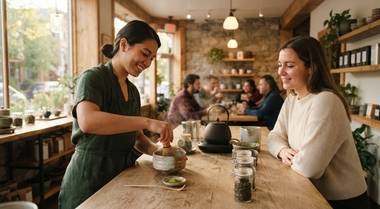
At a good tea bar, the first thing you notice may not be the menu. It is the small theater behind the counter: a scoop dipping into tea leaves, a kettle reaching the right temperature, a whisk moving quickly through a green bowl. Preparation happens in full view, and the time it requires is part of what you came for.
This is the charm of a welcoming tea shop, where hospitality feels less like policy and more like a habit passed from person to person. The modern tea bar brings that intimacy into public life. It offers a place to arrive alone without feeling lonely, meet a friend without planning an entire evening, or sit quietly without purchasing a second personality along with your drink.
A Room Between Rooms
The idea of a third place describes an informal gathering space beyond home and work. Cafes, pubs, barber shops, and neighborhood stores have long filled this role. Their importance rests less on grandeur than on repetition. You return. Someone remembers your order. Familiar faces become acquaintances, then perhaps companions. Community develops sideways while everyone is ostensibly doing something else.
Tea is particularly well suited to this kind of room. It can be solitary or social, brisk or contemplative. A cup gives the hands something to hold and conversation a natural rhythm. Unlike an elaborate meal, tea does not demand an occasion. Yet when prepared with care, it quietly creates one.
The best tea bars understand that ritual should invite rather than intimidate. A newcomer does not need a lecture on cultivar, oxidation, elevation, and water chemistry before taking a sip. Curiosity often begins with something visible: rolled leaves opening, steam carrying an unfamiliar fragrance, or a whisk transforming powder and water into a vivid suspension.
Preparation as Welcome
Matcha makes the work of tea especially visible. Because the powdered leaf is whisked directly into water rather than infused and removed, its preparation cannot disappear backstage. The measured powder, quick movement of the whisk, and changing texture give the guest a way into the drink. Watching does not confer instant expertise, but it removes some of the mystery. This is made, not summoned.
Visible preparation also establishes trust. Temperature and timing matter, and seeing them handled thoughtfully reassures the drinker that a delicate green tea will not be punished with boiling water and neglect. It also creates an opening for questions. Asking about the temperature feels natural when the kettle is in view, and a good host can answer without turning the counter into an oral examination.
Other teas offer their own modest spectacles. The hand-rolled leaves of jasmine phoenix pearls unfurl in hot water as they release their floral fragrance. The tightly rolled leaves of jade oolong expand through repeated steepings, changing in aroma and flavor. These transformations remind us that tea leaves are agricultural products with structure, history, and character, not anonymous brown confetti.
The Kindness of a Short Menu
A focused menu can make this world approachable without flattening it into a passing trend. Choice is useful, but abundance is not always hospitable. Faced with pages of poetic names, even an adventurous guest may retreat to the one familiar item. A shorter selection gives each tea room to be described in ordinary language: brisk or soft, roasted or floral, suited to milk or best enjoyed alone.
This is where personal taste can replace the anxious search for the correct order. Someone who likes toasted flavors might be guided toward a roasted or nutty tea. Someone seeking fragrance might prefer jasmine. The conversation becomes less about passing a test and more about noticing what one enjoys.
Such guidance is hospitality, not gatekeeping. Tea carries centuries of traditions across many cultures, and those traditions deserve respect. But respect need not require stiffness. The modern tea bar succeeds when it preserves care while lowering the social risk. You may learn something, but you are also allowed simply to like your drink.
Taking the Third Place Home
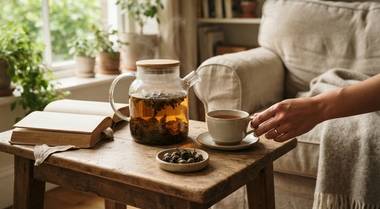
The paradox of a good third place is that it can improve life beyond its walls. Watching tea prepared carefully may inspire a calmer routine at home, without ceremonial equipment or a dedicated tea room. A practical brewer such as the ingenuiTEA 2 makes loose leaf preparation visible and manageable, preserving the pleasure of watching leaves expand while keeping cleanup decidedly modern.
Still, the tea bar offers something no teaware can reproduce: shared presence. It is the murmur at the next table, the regular arriving at the usual hour, and the host remembering that you prefer your tea unsweetened. When work and leisure can collapse into the same glowing screen, a public room organized around attention feels quietly radical.
The tea bar does not need to become fashionable to matter. Its deeper appeal is older and steadier than fashion: a warm cup, a practiced welcome, and enough time to notice both. Between home and work, it makes room for the useful luxury of being somewhere on purpose.