What Makes Tea Taste Cozy?
by Adagio Teas
October 06, 2026
The first properly cold morning of the year has a particular choreography. Socks become nonnegotiable. The nearest blanket acquires the status of a minor household deity. Tea, perfectly pleasant yesterday, suddenly seems essential. We call the resulting cup "cozy," as if coziness were an ingredient measured by the teaspoon. It is not. Yet the word describes a familiar blend of flavors, aromas, textures, temperatures, and memories. Cozy tea is less a category than a sensory plot, and we know how the story ends: indoors, preferably.

Cozy Is Not a Flavor
Taste receptors help us detect sweetness, bitterness, sourness, saltiness, and umami. Much of what we casually call flavor, however, depends on aroma. As we sip, volatile compounds travel from the mouth to the nasal cavity through retronasal olfaction. This is why a tea can suggest cocoa, baked apple, honey, or toasted nuts without containing those foods. Its aromatic compounds create patterns that the brain recognizes through previous experience.
"Cozy" gathers several of those patterns beneath one capacious woolen umbrella. Toasted grain suggests warm bread. Vanilla recalls custard, cakes, and sweet kitchens. Cinnamon and nutmeg evoke baked goods, while malt, cocoa, smoke, and dried fruit suggest hearths, ovens, and winter cupboards. None is universally comforting. Sensory meaning is learned as well as perceived, so one person's fireside is another person's regrettable encounter with a scented candle.
The Toasted Side of Tea
Tea processing creates dramatically different aromatic profiles. Oxidation in black tea can encourage impressions of deep fruit, malt, honey, and cocoa. Firing and roasting may contribute nutty, woody, or toasted aromas. These descriptions do not necessarily indicate literal caramelization. Instead, the aromas resemble those of browned foods. The brain notices the family resemblance and supplies the bakery.
genmai cha makes the toasted connection especially clear by pairing green tea with toasted, popped rice. Its warm, nutty character feels hearty even though the cup remains relatively light. In a darker register, golden monkey offers roasted apple, cocoa, and spice notes with a rich, smooth texture. One suggests a rice tin opened near the stove; the other, an orchard pie cooling just out of sight.
Spice, Smoke, and the Illusion of Warmth
Some cozy sensations involve the trigeminal system, which responds to temperature, irritation, cooling, and pungency. Cinnamon, ginger, pepper, and clove can create an impression of warmth even when their actual temperature matches the rest of the cup. That makes masala chai an especially clear expression of coziness: fragrant spices, robust tea, and a warming finish all reinforce the same message.
Smoke works differently. Its cozy reputation depends on context and association, calling to mind fireplaces, campfires, and food cooked over wood. A tea such as lapsang souchong, with savory smoke and sweet pine, can feel like a landscape in a cup. It is not cozy in the pastry-shop sense. It is cozy in the Bronte sense: weather outside, mysterious moorland implied, door firmly bolted.
Why the Mug Matters
Temperature is not merely atmosphere. Warm liquid can provide direct tactile comfort, while heat helps release volatile compounds that reach the nose. As tea cools, its balance may shift, making sweetness, astringency, fruit, spice, or earthiness more apparent. Texture matters too. A rounded, creamy, or silky cup often reads as comforting because it feels gentle and substantial. A thin, sharply astringent tea may be invigorating, but it rarely resembles a blanket.
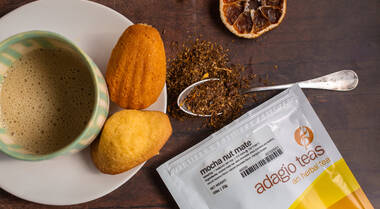
Then memory enters, carrying no measuring spoon and respecting no laboratory boundary. Marcel Proust had his madeleine; many tea drinkers have a chipped mug, a grandparent's kitchen, or the scent of cinnamon before a holiday meal. Repetition binds aromas to rituals, and rituals turn flavor into expectation. Eventually, the sound of a kettle can begin the comforting experience before the leaves touch water.
Building Your Own Definition
To taste for coziness, begin without searching for a prescribed answer. Notice whether the cup suggests toast, nuts, malt, vanilla, cocoa, cooked fruit, warm spice, or smoke. Consider its weight and texture. Sip again after several minutes to discover what cooling reveals. Most importantly, ask what the aroma recalls. Cozy is not a chemical compound hidden in the leaf. It is what happens when chemistry meets biography, served hot.