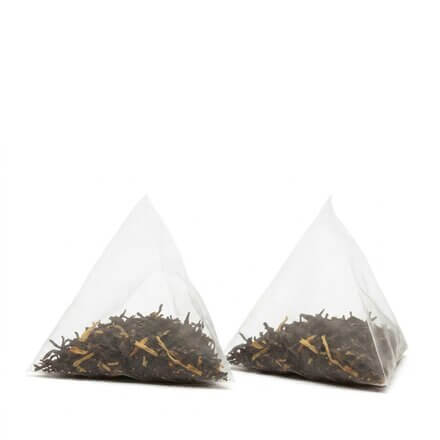
Teabags
Our teabags contain the same high-quality tea as our loose-tea offerings. Their pyramid shape gives the leaves plenty of room to unfurl and infuse, placing more flavor in each cup. Enjoy the superior flavor of gourmet tea with the convenience of a disposable bag.
teabags
15 full leaf pyramids
$12
Lore
The Himalayas are the collective ranges of mountains that separate India and the Tibetan plateau. They include several of the world's highest mountains, including Mount Everest, and are split into several parallel ranges. Darjeeling, a region in the Indian state of West Bengal, lies in the Lower Himalayan range, where it has a clear view of Kangchenjunga, the world's third-highest mountain. The location is also ideal for growing tea, as made clear by Darjeeling tea, which is one of the most prized teas in the world and can only be grown in that region.
Part of teas of India and Sri Lanka sampler
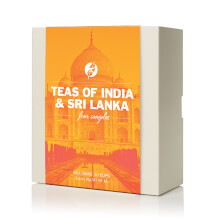
Explore a variety of teas with our popular sampler set.
Four teas included are:
assam melody, ceylon sonata, darjeeling sungma summer, irish breakfast
Indian and Sri Lankan
will make 40 cups
$14
Direct Trade Advantage
We import directly from the artisan farmers whose names and faces you'll find throughout our website.
This makes our products fresher than those offered by the companies who use middlemen and brokers, and also less expensive.
Here's a comparison of how much more you'd be paying by buying this elsewhere:
Teavana:
310% more expensive
David's Tea:
57% more expensive
What is full-leaf Darjeeling tea and where is it grown?
Full-leaf Darjeeling tea is a premium loose-leaf tea made from the top buds and leaves of Camellia sinensis plants grown and processed in the Darjeeling district of West Bengal in northeastern India. The “full-leaf” designation means the leaves are largely intact and not broken into fannings or dust, which helps preserve the delicate aromatics and nuanced flavor that Darjeeling teas are known for. Authentic Darjeeling tea is a geographically protected product, meaning only tea harvested and produced within the recognized estates of the Darjeeling region can legally bear the name.
Darjeeling tea gardens are typically found on the slopes of the lower Himalayas at elevations roughly between 600 m and 2000 m above sea level, where cool mountain air, mist, cloud cover, and well-drained soils create a unique terroir that shapes the tea’s character. While it is most famous as a black tea, the same region also produces green, white, and oolong styles
What does full-leaf Darjeeling tea taste like?
Full-leaf Darjeeling black tea is known for a delicate, layered flavour profile that stands apart from many other black teas. It is often described as having a muscatel character — a sweet, fruity quality reminiscent of muscat grapes with a light spiced undertone that gives it complexity and depth. Depending on the harvest season, the taste can vary: first flush teas tend to be lighter, floral, and gently astringent, while second flush teas develop a richer body and more pronounced muscatel fruit notes. Overall, Darjeeling brews are typically smooth and aromatic, often with hints of apricot, peach, honey, and subtle floral or citrus nuances, and a refined finish that many tea drinkers compare to wine.
Is Darjeeling tea high in caffeine?
Yes. Full-leaf Darjeeling black tea contains caffeine, but it falls into the moderate range typical of black teas rather than being unusually high. A standard 8-ounce (240 ml) cup of Darjeeling tea generally contains around 40 mg to 70 mg of caffeine, though the exact level can vary with the specific leaves and how long the tea is brewed. Compared with coffee, which often has 90 mg or more per cup, Darjeeling has less caffeine overall, but it still delivers a noticeable stimulating effect that can help with alertness and focus.
How should loose leaf Darjeeling tea be brewed for the best flavor?
To brew loose-leaf Darjeeling black tea for the best flavor, start with fresh, high-quality leaves and clean, filtered water. Because Darjeeling teas are more delicate than many other black teas and prized for their floral and nuanced fruit notes, aim for water that is just below boiling — roughly 85°C to 95°C (185°F to 203°F) — letting freshly boiled water cool for a minute or two before pouring if you do not have a thermometer.
Use about 2 to 3 g of tea (roughly one teaspoon) per 8-ounce cup and pre-warm your teapot or cup with a little hot water so the temperature does not drop when you begin brewing. Steep the leaves for about 3 to 4 minutes as a starting point, adjusting slightly shorter or longer based on your taste; shorter steeping highlights lighter, more delicate aromatics, while a bit longer can bring out fuller body and richer muscatel character without turning bitter.
Once the steeping time is complete, remove the leaves promptly so the tea does not over-extract. Darjeeling tea is typically enjoyed without milk or sugar so you can fully appreciate its subtle floral and fruit nuances, though a small amount of honey or a slice of lemon can complement the flavor if you prefer.
What are the health benefits of drinking Darjeeling tea?
Drinking Darjeeling tea as part of a balanced diet may offer a number of potential wellness benefits, many of which are shared with other high-quality black teas due to their rich antioxidant and polyphenol content. The leaves in Darjeeling contain plant compounds like theaflavins, thearubigins and other flavonoids that help neutralize free radicals and support the body’s antioxidant defenses, which may reduce oxidative stress and inflammation.
Research suggests that these antioxidants may contribute to heart health by assisting in cholesterol regulation and supporting healthy blood vessel function, which can in turn help lower the risk of cardiovascular disease. Some studies also show that black tea polyphenols may help regulate blood sugar levels and improve metabolic health when tea is consumed regularly.
Because Darjeeling tea is naturally low in calories and contains caffeine and the amino acid L-theanine, moderate consumption can support mental alertness and focus, and the ritual of drinking tea may even have a calming effect. There is also early evidence from laboratory and observational studies that tea antioxidants may play a role in protective cellular mechanisms and could help reduce the risk of some chronic conditions, though clinical results in humans are not definitive.
Overall, moderate Darjeeling tea consumption can be a healthful choice when it replaces sugar-laden or high-calorie beverages, but it should be viewed as part of an overall lifestyle that includes balanced nutrition, regular physical activity and other healthy habits rather than a standalone cure-all.
Where can I buy loose-leaf Darjeeling tea online?
Buy premium loose-leaf Darjeeling tea online at Adagio Teas. Choose from the solid and affordable Darjeeling Sungma tea, and the exquisite and memorable Darjeeling Puttabong tea. Both teas were harvested in summertime, which makes them Second Flush teas. They are available in sample packs, pyramid teabags, various bulk sizes, as well as single-serve portions.