Breakfast Tea Beyond the Label
by Adagio Teas
October 14, 2026
Morning is a stern editor. It cuts ornamental plans, questions every extra minute, and demands a drink with enough presence to meet toast, eggs, or the unnerving brightness of an inbox. Breakfast tea evolved for this practical theater. It is not a botanical category or a single recipe, but a style: usually black tea, full in body, brisk in finish, and sturdy enough to remain itself when milk enters the cup.
What Makes a Tea a Breakfast Tea?
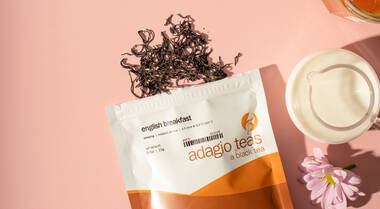
The name describes character more than origin. A breakfast tea may come from one region or combine teas from several. What matters is structure: a substantial aroma, satisfying weight on the palate, and some astringency, the drying sensation that gives a cup definition. That briskness is not a flaw. At breakfast, it provides useful contrast, cutting through butter, jam, or a rich plate rather than fading politely into the tablecloth.English Breakfast illustrates how tradition can be both recognizable and surprisingly fluid. Many contemporary versions are blends, while earlier examples often featured Chinese black teas such as Keemun, from Anhui province. Keemun tends to offer a balanced profile, with a honeyed aroma, restrained smokiness, and astringency that arrives neatly rather than kicking down the door. It can be robust, but its strength comes with composure.
English Breakfast Versus Assam
Assam takes a different route to morning authority. Grown in northeastern India, Assam black tea is commonly associated with malt, dark fruit, roasted grain, and deep color in the cup. Where Keemun may feel tailored, Assam often feels upholstered. A bold example such as Assam Harmony brings raisin-like sweetness and smooth but noticeable astringency, qualities that make it particularly compatible with milk and sugar.This does not mean Assam is simply a stronger English Breakfast. One is a regional tea; the other is a named style that may include teas from several regions. Assam frequently appears in breakfast blends because its body provides a dependable foundation. Sri Lankan black teas may contribute brightness and citrus notes, while Keemun can add gentle smoke and depth. Blending is less a disguise than an act of orchestration: bass, treble, and rhythm arranged for a consistent morning performance.
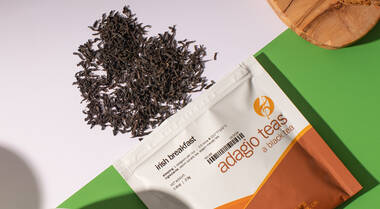
That principle is easy to taste in Irish Breakfast, a hearty blend of Indian and Sri Lankan teas with a spicy, jammy character. Meanwhile, Scottish Breakfast combines Assam, Keemun, Yunnan, and Sri Lankan full-leaf teas for notes of malt, red fruit, smoke, and pepper. These national labels suggest a general character rather than a legally fixed formula. Irish and Scottish breakfast blends are often made to taste especially rich, but the leaves in the tin matter more than the flag on the label.
How the Leaf Changes the Cup
Leaf selection influences how breakfast tea behaves in water. Smaller pieces expose more surface area, releasing color, flavor, and astringency quickly. Larger, more intact leaves generally infuse more gradually and may reveal greater aromatic detail. Neither format automatically guarantees quality. A finely cut tea can be exactly right for a fast, emphatic morning cup, while full leaves reward a little more room and patience.The amount of tea matters, too. A weak breakfast tea often needs more leaf, not a punishingly long steep. Prolonged brewing can emphasize bitterness and dryness without producing the round body you wanted. Begin with roughly one teaspoon of loose tea per eight ounces of water, adjusting for leaf size. Use freshly heated water near boiling and steep for three to five minutes. Taste at the three-minute mark, then continue until the cup reaches the strength and balance you prefer.
Milk, Method, and Morning Diplomacy
Milk softens perceived astringency and adds richness, but it can also mute delicate aromas. Brew the tea to the desired strength before adding milk; trying to rescue a pale infusion afterward is an exercise in disappointment. Add a small amount, taste, and proceed cautiously. Sugar can round sharper edges, although naturally malty or honeyed teas may need very little.In his essay on tea making, George Orwell proposed eleven rules, proving that the cup has long encouraged firm opinions. Fortunately, breakfast tea rewards experimentation more than obedience. Compare a Keemun-based English Breakfast without milk, then taste Assam with a modest splash. Change one variable at a time: leaf quantity, steeping time, or milk. The best breakfast tea is not merely the strongest. It is the one that brings clarity, comfort, and just enough ceremony to the day's least ceremonial hour.