When Chai Met Cider
by Adagio Teas
August 10, 2026

There is a particular kind of autumn afternoon when choosing between tea and cider feels needlessly bureaucratic. The light has gone amber, the kitchen is cool, and both drinks seem to be making persuasive arguments from opposite sides of the counter. Fortunately, they are not rivals. Combine them and you get chaider, an ungainly portmanteau for an unusually graceful drink.
The pairing works because each half supplies what the other lacks. Black tea brings tannic structure, gentle bitterness, and enough depth to keep apple cider from becoming cloying. Cider contributes sweetness, fruit, and acidity, rounding the tea's sharper edges. Chai spices occupy the middle ground, connecting the briskness of the leaves to the baked-fruit character of the apples. The result can taste layered and composed, like mulled cider with better posture.
A Small Lesson in Balance
Sweet apple cider, meaning the cloudy, nonalcoholic kind, contains natural sugars and acids. Their balance varies by apple blend, so one jug may taste honeyed while another is distinctly tart. Black tea is similarly variable, but its polyphenols contribute the drying sensation called astringency. In a successful chaider, sweetness softens that dryness while acidity keeps the cup lively. Neither ingredient should disappear.
This is why a sturdy tea works better than a delicate one. Masala Chai combines black tea with an established spice blend, making it a simple foundation. The words themselves are useful: chai means tea, while masala refers to a mixture of spices. Saying "chai tea" is therefore redundant, although language has survived greater indignities.
If you prefer to control every spice, begin with Irish Breakfast. Its hearty black tea base can stand beside concentrated apple flavor. Add cinnamon, ginger, cardamom, or clove yourself, remembering that these ingredients are not a parliamentary coalition. They do not all require equal representation.
The Potpourri Problem
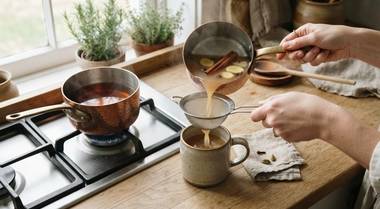
Chaider goes wrong when enthusiasm replaces proportion. Cinnamon is familiar and forgiving, but clove can dominate with startling speed. Cardamom contributes a cool, aromatic lift, while ginger adds heat rather than perfume. Star anise, if used, should be handled with similar restraint. Too many whole spices simmered for too long can produce a cup that tastes less like a beverage and more like the scented aisle of a craft store.
The gentlest method is to brew the tea strongly, warm the cider separately, and then combine them. For two servings, prepare enough tea for one generous mug, using about twice your normal amount of leaf but the usual brewing time. Meanwhile, heat an equal amount of cider until steaming, not boiling. Mix the two, taste, and adjust. More cider increases sweetness and fruit, while more tea adds grip and briskness.
If you are using plain black tea, warm one small cinnamon stick and two thin slices of fresh ginger with the cider for five to ten minutes, then remove them. If desired, add one lightly crushed cardamom pod. Clove should begin as a single bud, not a handful. This cautious method is easier to correct than a spice cauldron worthy of Macbeth.
Adjust the Cup, Not the Season
The cider may provide all the sweetness you need. If not, a little brown sugar or maple syrup will emphasize its cooked-apple character, while honey adds a more floral note. A strip of orange peel can brighten a particularly sweet batch, but avoid the white pith, which may introduce extra bitterness. Lemon juice is useful only by the drop because cider already brings acidity to the arrangement.
Milk is optional and slightly tricky. Because cider is acidic, dairy milk can curdle, especially when the drink is very hot. If you want a creamier cup, let the chaider cool slightly, then add a small amount of warmed milk gradually. Plant-based alternatives can also separate, so test a spoonful before committing the carton. For a caffeine-free version, Rooibos Vanilla Chai supplies spice, vanilla warmth, and a naturally mellow base that welcomes apple without demanding extra sugar.
Chaider is less a fixed recipe than a useful equation: structure plus fruit, sweetness checked by acidity, and fragrance held in reserve. Once those roles are clear, the drink becomes easy to tailor. Tart cider wants a softer tea and perhaps a touch of sweetener. Very sweet cider needs a brisker brew and more ginger. The best version still tastes recognizably of apples and tea. The spices should enter like excellent supporting actors, memorable but never attempting to seize the entire production.