ingredients & lore
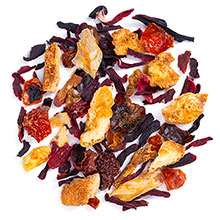
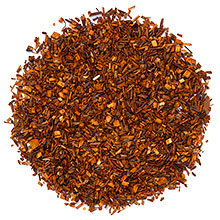
blended with black tea, rooibos, orange peels, rose hips, hibiscus flowers, ginger root, natural ginger flavor, natural orange flavor
accented with aniseed and ginger
In case the title and the snark in the description did not clue you in, an emmenagogue tea is a tea used to bring on menstruation. I am neither a doctor nor an herbalist, but I have been playing around with emmenagogue teas on and off for a few years now. The one that works best in the opinion of many people is parsley tea, but it basically tastes like a grass tisane, and you need to drink 3-4 cups to get it to work. That would be fine, except I have discovered I don't like parsley tea all that much, and its effectiveness varies depending on how fresh the parsley is and the steeping time.
Ginger is another emmenagogue, and one I actually enjoy drinking. I've made my own blends at home, either with parsley (which some people think can actually decrease effectiveness, so make a note of that) or with other herbs, most commonly chamomile or mint. An emmenagogue tea will not be able to bring on a period if your body is categorically not ready for it; for example, you can't shift your cycle drastically through one course of tea. If you've just finished a period in the last week, it shouldn't be able to bring on another immediately. However, it's handy if you're late, or if you're planning to shift your period slightly a few months in advance in anticipation of something like a vacation. Ginger is not one of the emmenagogues that doubles as an abortifacient in early stages of pregnancy, so it's generally safe to drink if you think you might be pregnant, although I've read that if you have kidney issues or a history of gallstones, you might not want to drink copious amounts of this tea.